Sinking Front Steps and Porch Stoops: When Foam Lifting Works
Entry steps and stoops pull away from the house and tip toward the yard. How to tell whether yours can be lifted, why hollow steps need a different approach, and what the job looks like.
Key takeaways
- Steps and stoops sink because they sit on backfill right against the foundation — the least-compacted soil on the lot.
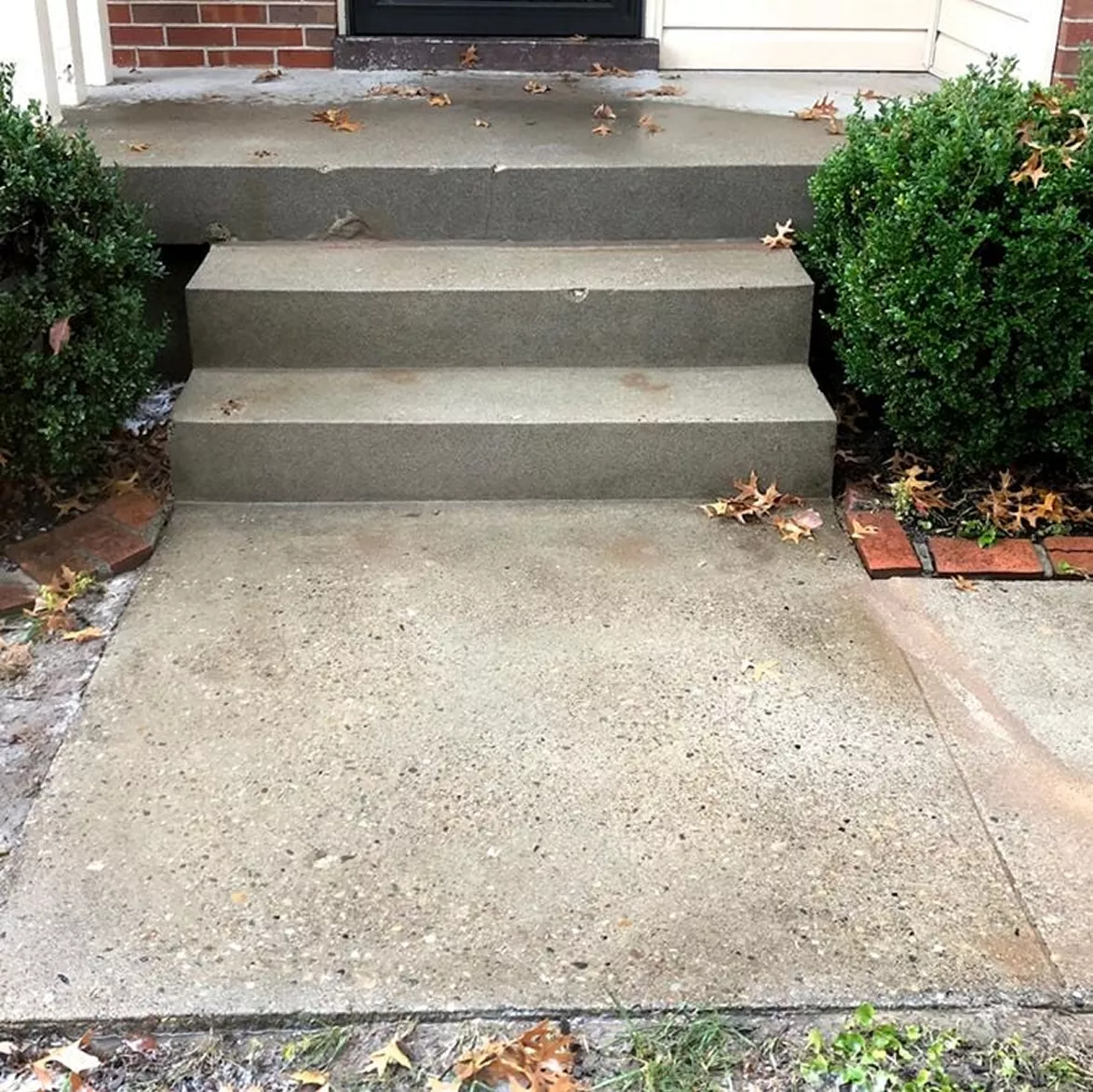
- Solid steps that have tipped or dropped as one piece are usually good lifting candidates; steps broken into pieces usually aren't.
- Many cast steps are hollow or sit on a void, so the cavity often has to be filled before the step will lift.
- A raised stoop should end up just below the door threshold with a slight fall away from the house.
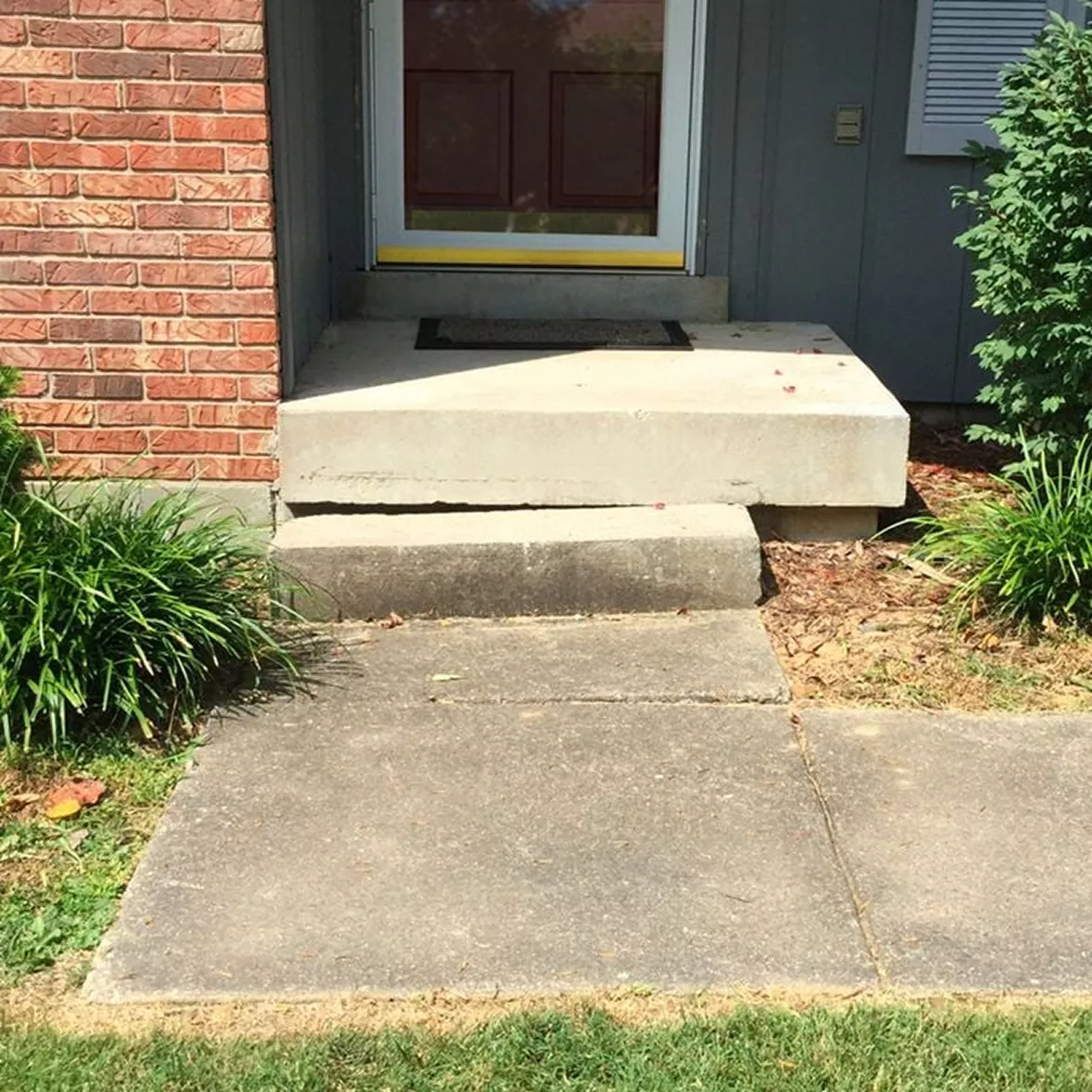
Front steps are the handshake of a house. When they’ve pulled an inch away from the foundation, tipped toward the walk and left a gap under the door, every visitor notices — and anyone with a cane or a bad knee feels it.
Steps and stoops are also one of the trickier things to lift, which is why it pays to understand what’s going on underneath before anyone drills.
Why steps sink
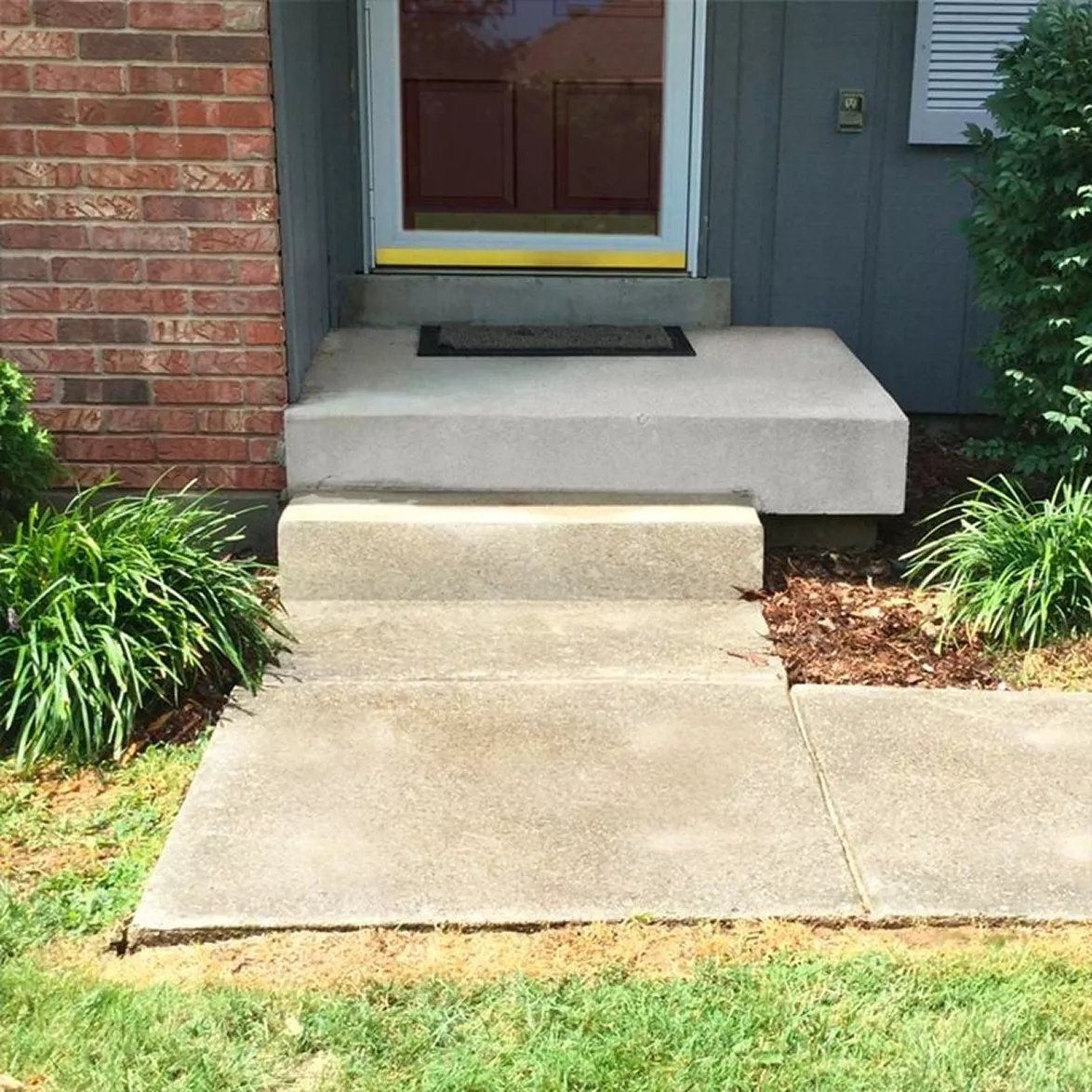
Entry steps sit in the worst possible spot on a lot: directly on the backfill against the foundation wall. That soil was dug out to pour the foundation and pushed back in afterwards, often with little compaction. It settles for years. Add a downspout at the corner of the porch, and the soil under one side of the step gets soft first — so the step doesn’t just sink, it rotates, tipping away from the house and opening a gap at the wall.
Solid, hollow, or poured over fill?
This is the question that decides how the job goes.
- Solid precast steps are one heavy, dense unit. If they’ve dropped or tipped without cracking through, they’re often excellent lifting candidates.
- Hollow precast steps are cast as a shell with an open interior. Foam injected underneath can just fill the cavity. A good crew drills into the hollow, fills it first, then lifts.
- Cast-in-place stoops are often a concrete cap poured over a box of fill or rubble. If that fill has slumped, there may be a large void inside the stoop itself. Again: fill the void, then lift.
When lifting is the wrong answer
- The steps are cracked through or broken into pieces.
- The step is pinned or doweled into the foundation and can’t rotate back without breaking.
- The concrete is crumbling on the treads and edges from years of de-icing salt.
- The step has heaved up rather than settled.
In those cases, replacement or a rebuild is usually the honest recommendation. Lifting can still help the walk or landing next to the new steps.
What the job looks like
- Measure everything. Gap at the foundation, drop below the threshold, tilt across the treads.
- Fill internal voids. If the step or stoop is hollow, the cavity is filled before any lifting starts.
- Lift from the low side. Ports go where they’ll rotate the step back toward the house. Injection is slow and closely watched.
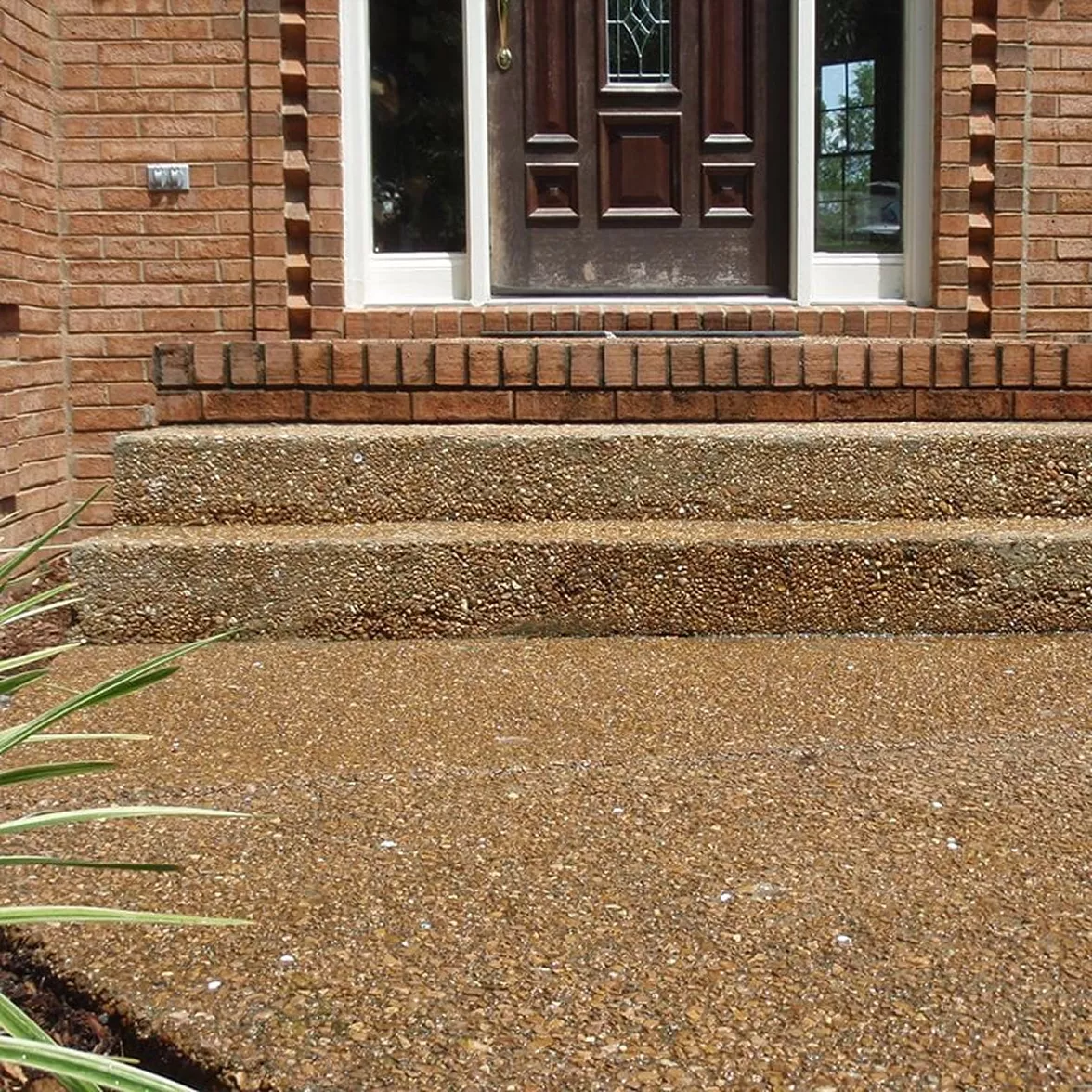
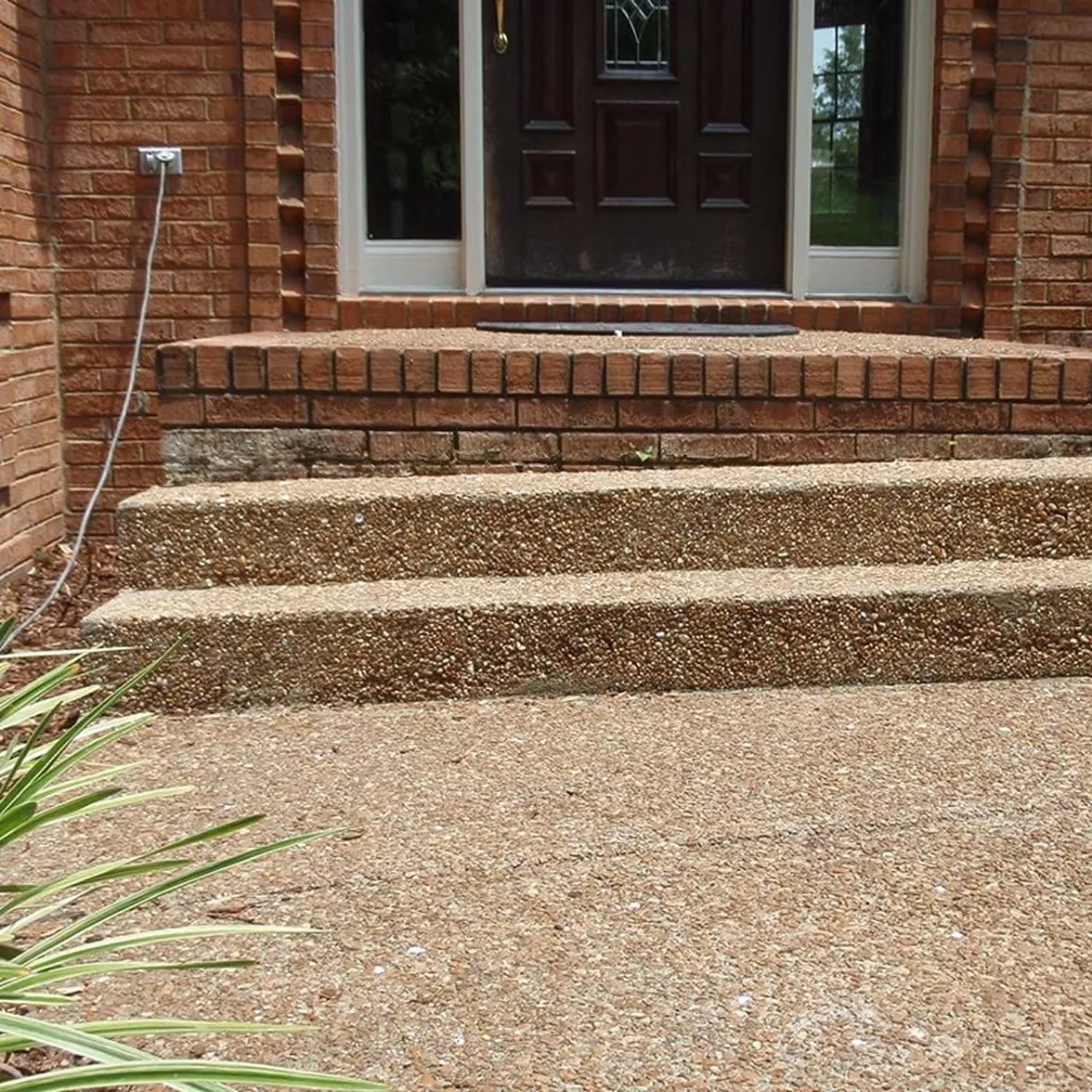
- Stop just shy of the threshold. The landing should end up just below the door sill with a slight fall away from the house, so water runs off rather than toward the door.
- Seal the gap at the wall. Backer rod and a flexible sealant in the joint between the step and the foundation keep water out of the backfill.
Why foam rather than mudjacking here
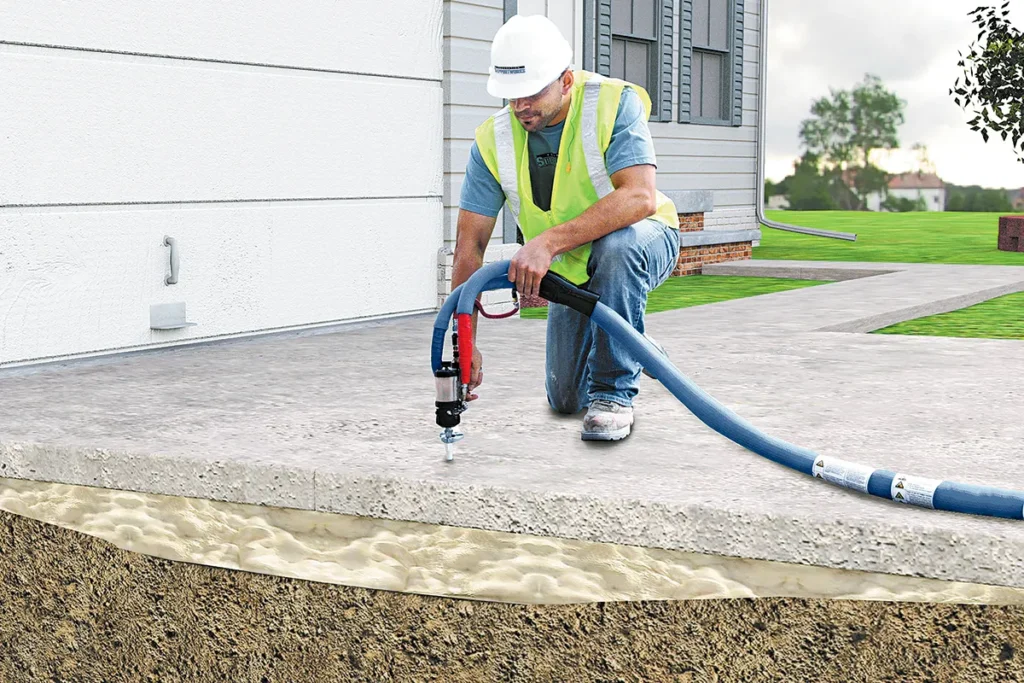
Steps are heavy, and the soil under them is weak. Pumping a dense slurry into a hollow step can add hundreds of pounds to the very backfill that’s already failing. Foam fills the same cavity at a few pounds per cubic foot, sets in minutes and leaves ports small enough to patch neatly on a front entrance — which is the one place on the house everyone looks at.
Tilted steps or a dropped stoop at your door? Request a free estimate. A photo from the side, showing the gap at the wall, tells an estimator most of what they need.

About the Lift Report
The Lift Report is the Poly Concrete Lifting guide to polyurethane slab lifting, written with input from the ArmorThane team that manufactures ArmorFoam Lift and the rigs that pump it. Got a correction or a job worth writing up? Tell us.