Bridge Approaches, Curb Lines and City Sidewalks: Polyurethane Lifting for Public Works
Settled approach slabs, rocking pavement panels and miles of cracked sidewalk. Why public works departments use polyurethane lifting, and how a city can run a trip-hazard program that actually keeps up.
Key takeaways
- The bump at the end of a bridge is usually a settled approach slab — a classic job for polyurethane lifting and void fill.
- Lifting can be done under short lane closures because foam reaches working strength in minutes.
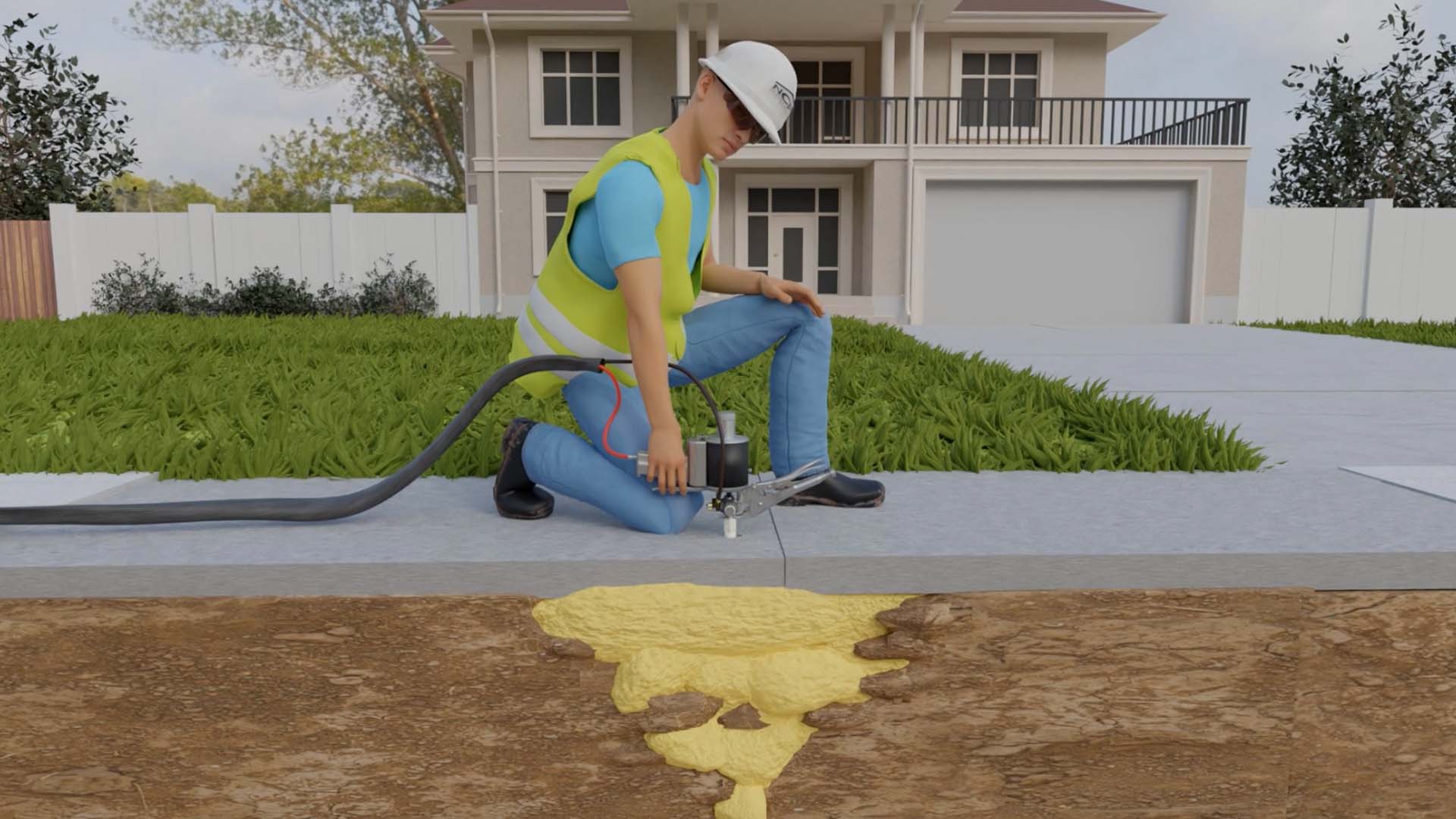
- For sidewalks, a lifting program clears trip hazards faster and with less disruption than tear-out and replacement.
- Before-and-after measurements give agencies a clean record of what was repaired and when.
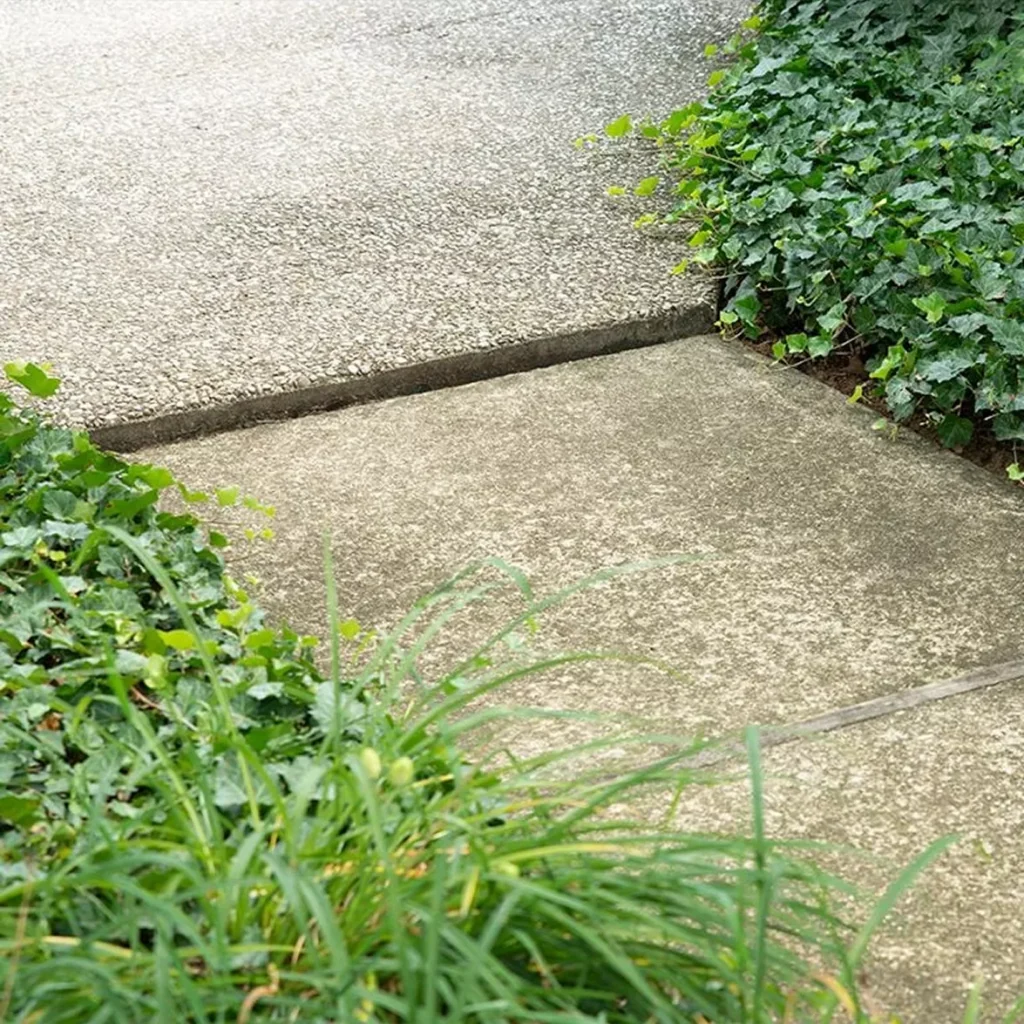
Every driver knows the bump at the end of a bridge. Every pedestrian knows the sidewalk panel that tilted up after the city planted a tree beside it thirty years ago. For public works departments, these aren’t one-off repairs; they’re endless lists. And the traditional fix — saw, break, haul, form, pour, cure — closes lanes and sidewalks for days at a time.
Polyurethane lifting has become a standard tool in that work because it attacks the two things agencies care about most: disruption and cost.
Bridge approach slabs
A bridge sits on deep foundations and barely moves. The road leading up to it sits on an embankment of compacted fill, which settles over time — especially near the abutment, where compaction is hardest and water collects. The approach slab bridges that transition, and when the fill under it settles or washes out, the slab drops and the famous bump appears.
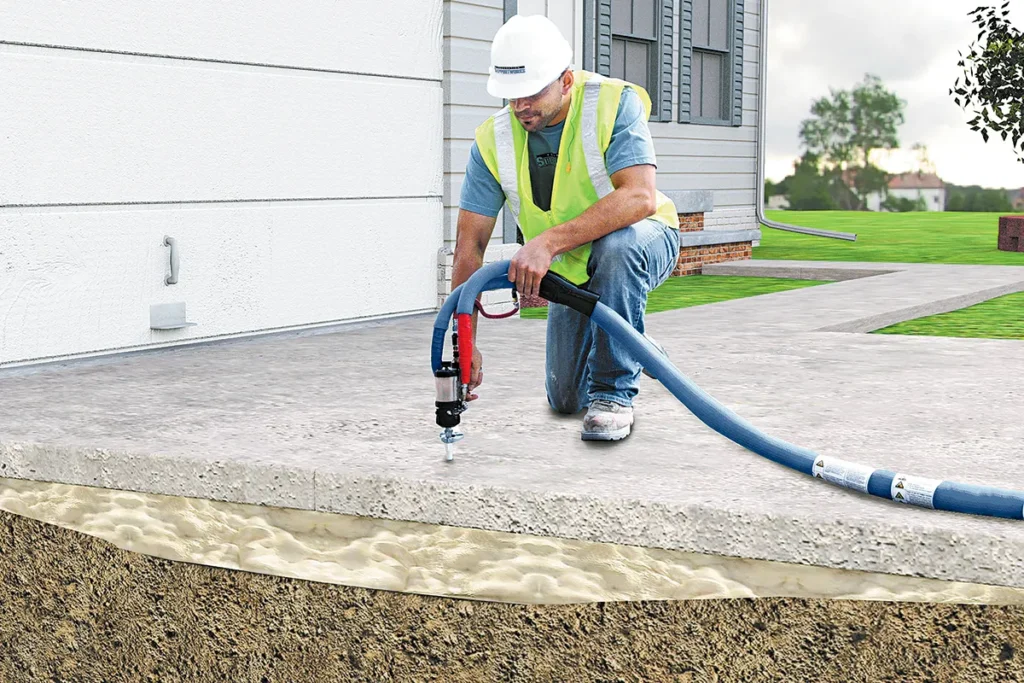
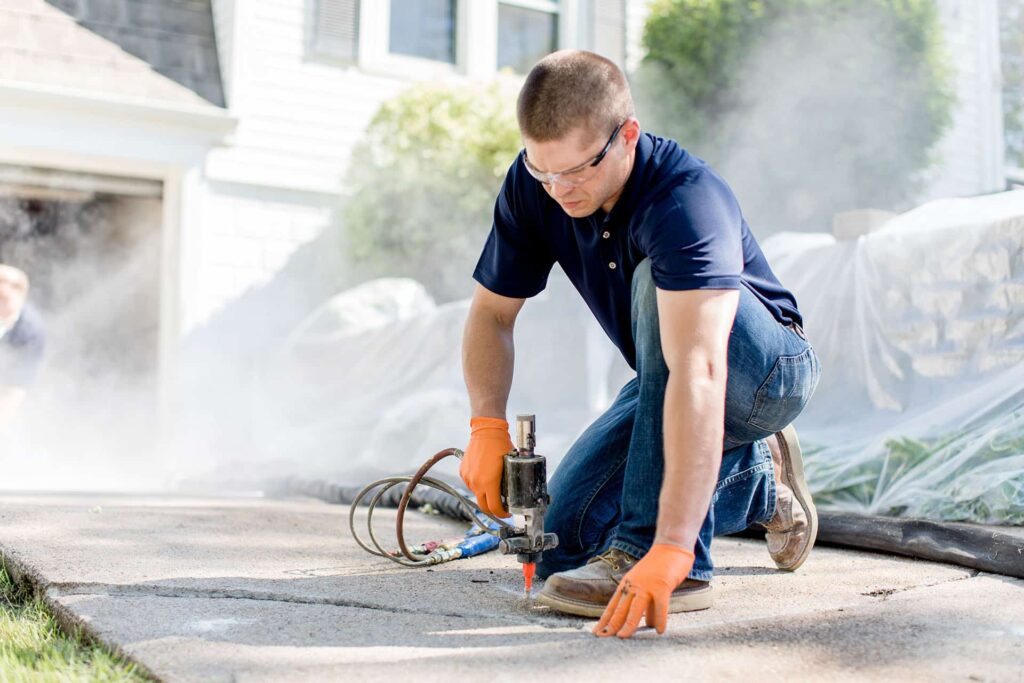
The polyurethane approach is to fill the voids under the approach slab and lift it back toward the planned profile through a grid of small ports, monitoring with survey equipment as it moves. Because foam sets in minutes, work can often happen under a short lane closure instead of a full reconstruction.
Pavement panels and joints
On jointed concrete pavement, the problem looks a lot like a warehouse floor at highway scale: water gets through the joints, traffic pumps the fines out, and panels start rocking and faulting — one panel ending lower than the next. Injecting foam under the leave side of the joint restores support and can bring a faulted panel back up. Fixing the support stops the pumping that caused the fault in the first place, especially when the joints are resealed afterwards.
Curb, gutter and drainage structures
- Curb and gutter that has dropped and now ponds water in the street.
- Inlets and catch basins where the surrounding slab has settled away from the casting.
- Culverts and box culverts with eroded backfill along the barrel.
- Retaining walls and wingwalls with voids behind them where water has carried soil out.
Running a sidewalk program that keeps up
Most cities have more sidewalk hazards than budget. Lifting doesn’t change the budget, but it stretches it. A practical program looks like this:
- Inventory. Measure every vertical displacement over the agency’s threshold — many use half an inch — and log it with location and photo.
- Triage. Sunken panels go to lifting. Heaved panels go to grinding or replacement. Shattered panels go to replacement.
- Batch by area. Lifting crews work fastest moving block by block, so schedule by neighborhood, not by complaint date.
- Seal and record. Seal the repaired joints and keep before-and-after measurements for every location.
Contracting the work
Agencies typically buy polyurethane lifting by the pound of material installed, by the location, or as a unit-price contract for a season of work. Specifications commonly cover foam density and properties, maximum lift per pass, monitoring method, hole size and patching, and traffic control. A capable contractor will be comfortable working to all of them.
For contractors, municipal and DOT work is often the next step after building a residential base — and the heavier ArmorFoam Lift 300 is built for exactly these loads. See what it takes to start, or request an assessment for a public works project.
About the Lift Report
The Lift Report is the Poly Concrete Lifting guide to polyurethane slab lifting, written with input from the ArmorThane team that manufactures ArmorFoam Lift and the rigs that pump it. Got a correction or a job worth writing up? Tell us.