Concrete Lifting Rig Buyer’s Guide: Proportioner, Hose, Gun and Truck
A lifting rig is a mobile foam plant. What each component does, what to look for when you spec one, and the questions to ask before you spend money — so your first rig is one you won't outgrow in a year.
Key takeaways
- The proportioner is the heart of the rig: it heats both components and meters them at the right ratio and pressure.
- Hose length, power supply and climate control decide which jobs you can reach and how many months of the year you can work.
- Trailer rigs cost less to get into; box-truck rigs are easier to keep warm and more professional at the curb.
- Spec the rig for the work you plan to chase in year two, not just the first job.
Polyurethane lifting foam arrives as two liquids in drums. Between the drums and the slab, they have to be brought to temperature, pumped at matched pressures, metered at the right ratio and mixed at the gun — on a customer’s driveway, in whatever weather the day brings. The equipment that does that is your lifting rig, and it’s the biggest decision you’ll make when starting out.
Here’s what goes into one and what to think about at each step.
The proportioner
A plural-component proportioner pumps the A and B components from their supply drums, heats them and delivers them to the gun at matched pressure so they mix at the correct ratio. Lifting foams like ArmorFoam Lift are designed to be processed this way — the reaction starts the moment the two components meet at the gun.
What to look for:
- Output. Matched to the size of the jobs you’ll do. Residential lifting doesn’t need the output of a big roofing rig, but commercial void fill can use plenty.
- Heat capacity. Primary heaters plus heated hose have to hold temperature on a cold morning at the end of a long hose run.
- Ratio and pressure monitoring. You want to see immediately if one side is off. Off-ratio foam is weak foam.
- Serviceability. Parts availability and a manufacturer who answers the phone matter more than any spec sheet.
ArmorThane offers proportioners from entry-level to high-output — including PMC models — and can match one to a lifting operation.
Heated hose
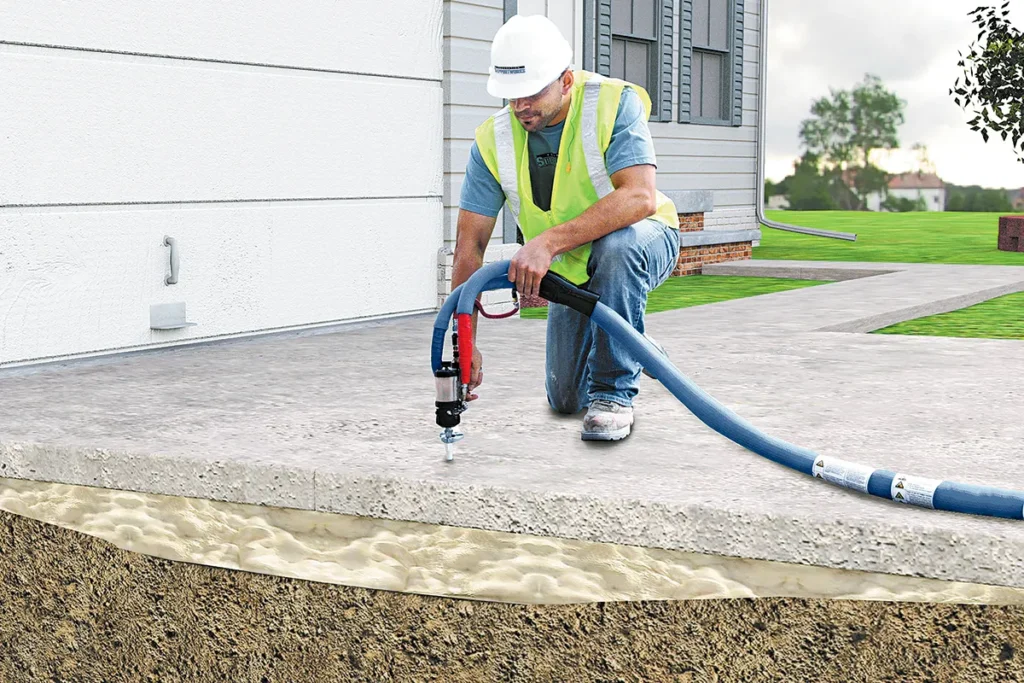
Hose length decides which jobs you can reach without moving the rig: the back patio, the pool deck behind the fence, the stoop at the far end of a long walk. Plenty of lifting rigs carry 150 to 250 feet or more. The hose has to be heated along its whole length to keep material at temperature, and it has to be protected — a crushed or kinked hose is a lost day.
The injection gun and lifting adapters
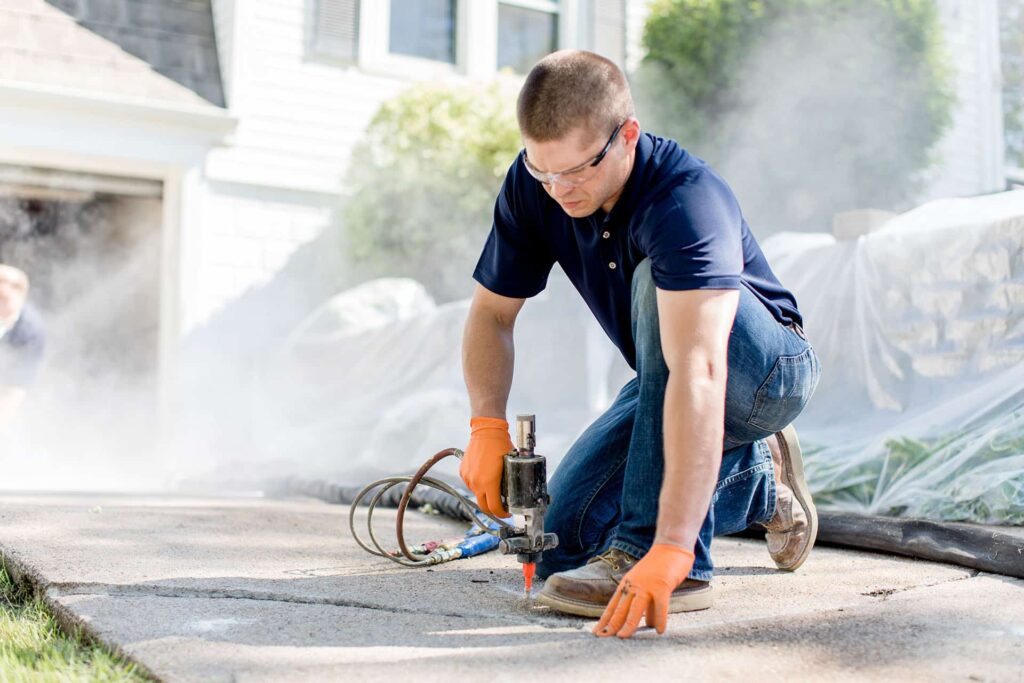
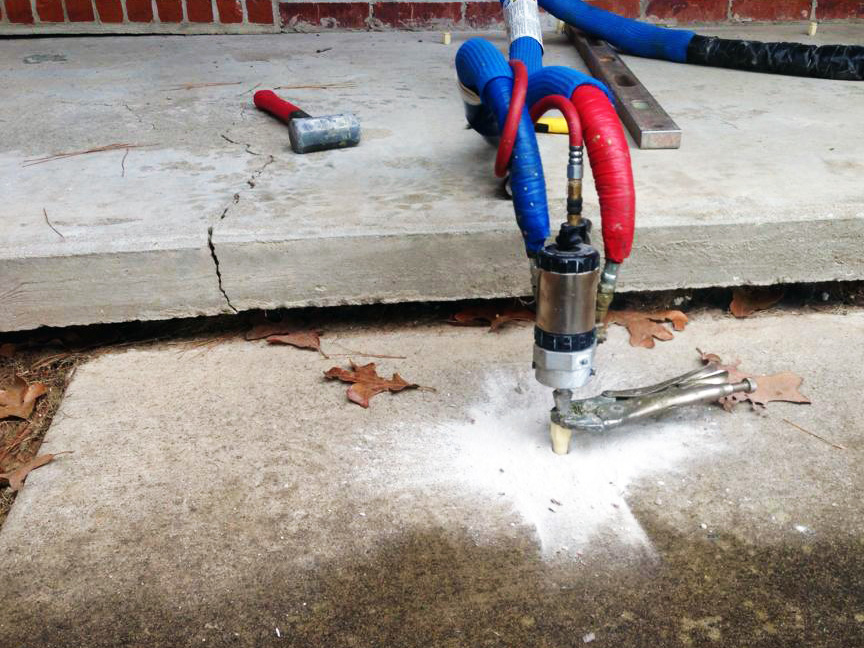
The gun mixes the two components and delivers foam into the port. For lifting, it’s paired with an injection adapter and ports that seal into the drilled hole so foam goes under the slab, not back up past the gun. Look for a gun that’s easy to clean and rebuild in the field, with spare parts on the truck.
Power and air
- Generator sized to run the proportioner heaters, hose heat, transfer pumps, lights and the climate system at the same time, with headroom.
- Air compressor and dryer for air-purge guns, transfer pumps and tools. Moisture in the air lines is an enemy of polyurethane.
Trailer or box truck?
| Trailer rig | Box-truck rig | |
|---|---|---|
| Upfront cost | Lower | Higher |
| Climate control | Possible, more work | Easier to insulate and heat |
| Tow vehicle | Needs a capable truck | Self-contained |
| Curb appeal | Good | Strong — a rolling billboard |
| Tight streets & parking | Harder to maneuver | Easier |
Either works. The deciding factors are usually budget, climate and whether you already own a tow vehicle.
Climate control and material storage
Foam components have a storage temperature range, and they process best when they start warm. In cold climates an insulated, heated rig box extends your season by months. In hot climates, keeping drums out of direct sun matters just as much. Drum heaters or tote warmers, agitators and good drum handling round it out.
The small stuff that saves your day
- Rotary hammer drills and bits sized for your ports, plus spares
- Laser level, straightedges and dial indicators for monitoring the lift
- Patching material in colors that match common concrete
- Joint sealant, backer rod and a caulk gun
- Gun cleaning supplies and rebuild kits
- Respirators, gloves and eye protection — isocyanates deserve respect
- Drop cloths and a shop vac; customers judge you by the cleanup
Questions to ask before you buy
- Who will service this rig, and how fast can I get parts?
- Can it handle both Lift 200 and Lift 300, and other foams or coatings later?
- Is the generator sized for everything running at once?
- How long a hose can it heat reliably in my winters?
- Does the purchase include training on the rig itself?
- What financing options are available?
ArmorThane designs and builds custom rigs for foam and coatings work and can spec one around your plans. Get the startup package and tell us what you want to lift.

About the Lift Report
The Lift Report is the Poly Concrete Lifting guide to polyurethane slab lifting, written with input from the ArmorThane team that manufactures ArmorFoam Lift and the rigs that pump it. Got a correction or a job worth writing up? Tell us.