Garage and Warehouse Floor Lifting: Leveling Slabs That Carry Real Weight
Interior slabs bring their own problems: radiant tubing, plumbing, forklifts and downtime. How lifting and slab stabilization work under a roof, and when the heavier Lift 300 foam earns its keep.
Key takeaways
- Before anyone drills an interior slab, locate radiant heat tubing, plumbing, conduit and post-tensioning cables.
- In warehouses the usual problem is rocking slabs at joints under forklift traffic — stabilizing the void often matters more than lifting.
- ArmorFoam Lift 300 (about 3.75 lb/ft³) is the higher-density option for heavy commercial and industrial slabs.
- Polyurethane work can be phased aisle by aisle, so a facility keeps operating while the floor is repaired.
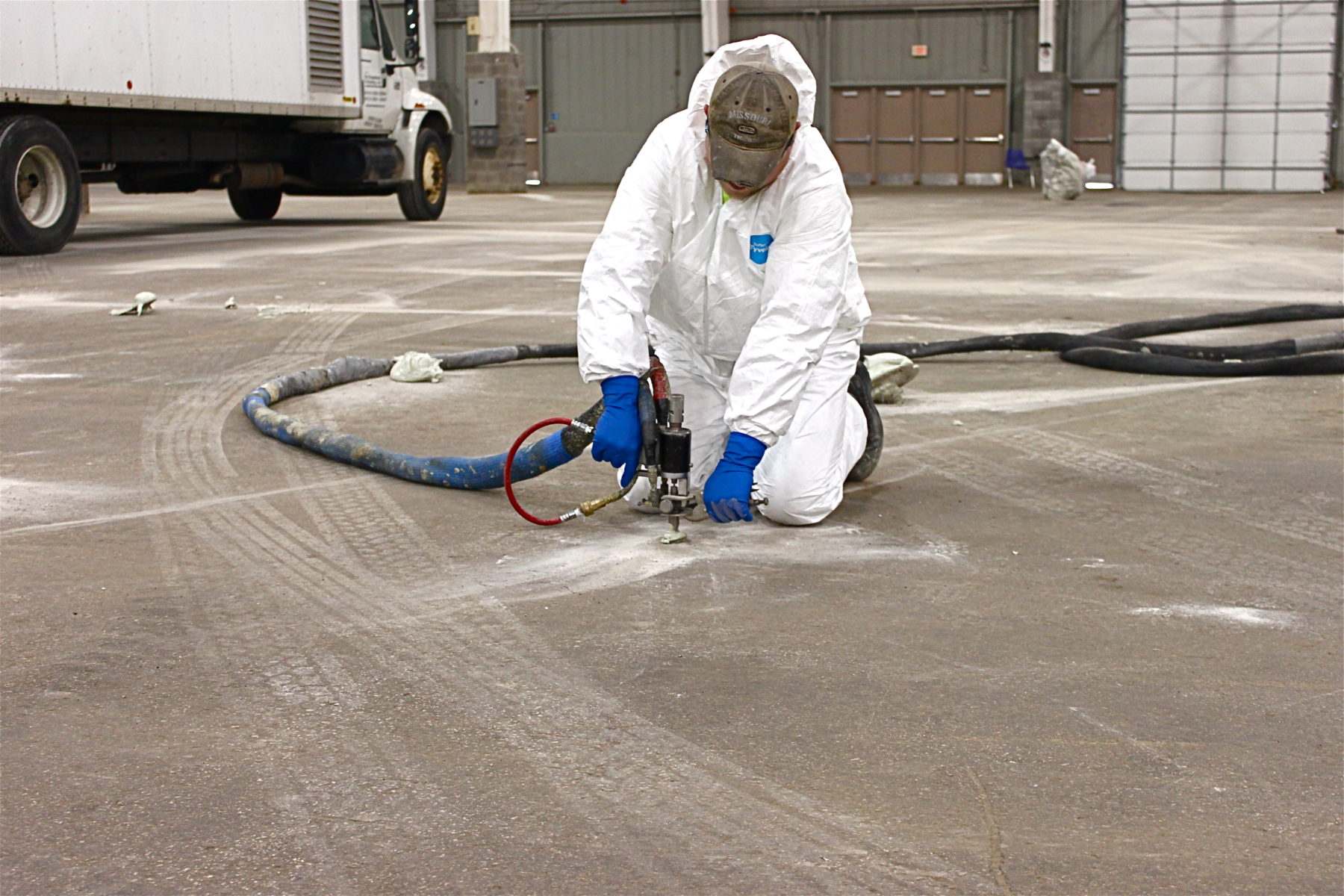
A sunken slab under a roof is a different animal. There’s no lawn to run a hose across, there may be pipes and wires in the concrete, and in a warehouse, every hour the floor is out of service costs money. Polyurethane lifting still works — it’s often the only practical fix — but the planning matters more.
Garage floors
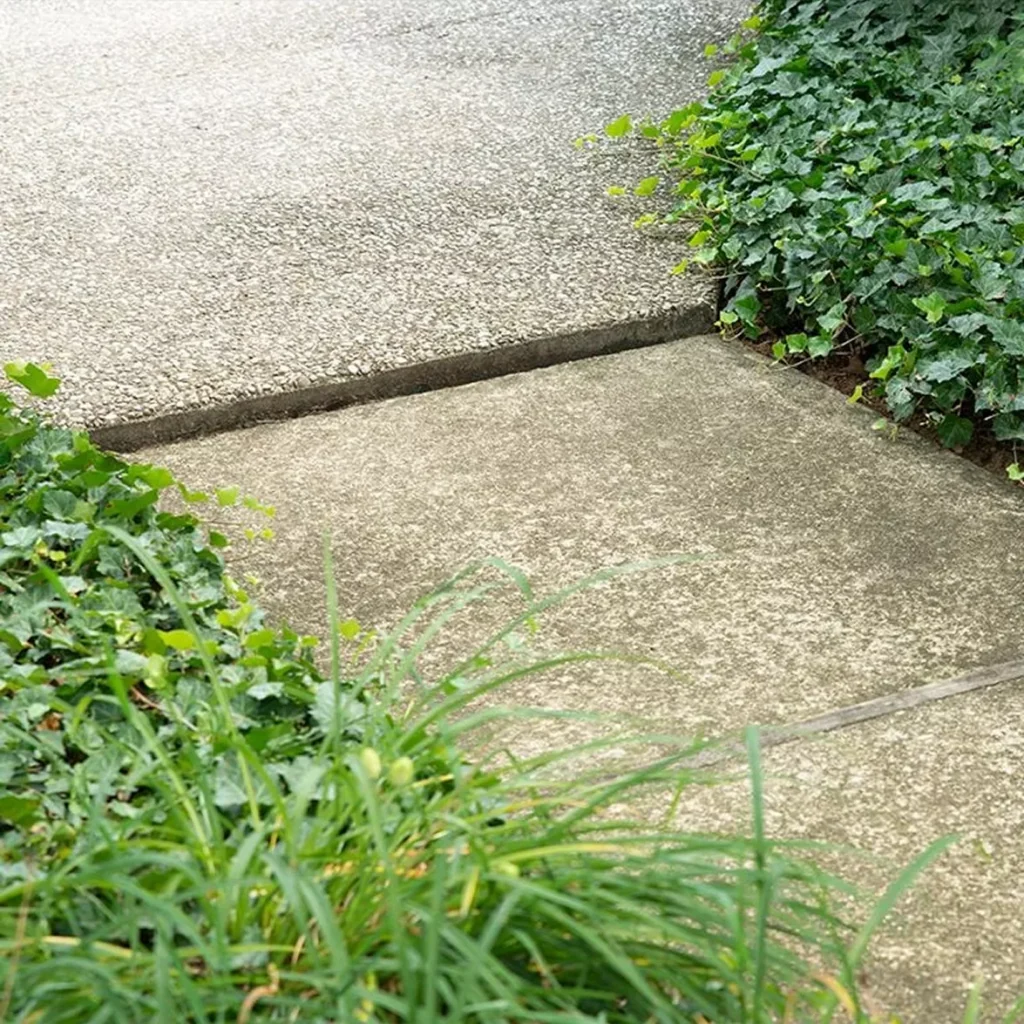
Attached-garage slabs settle for the same reason driveways do: they’re poured on fill inside the foundation walls, and that fill compacts over time. The tell-tale signs are a slab that has dropped away from the foundation wall or stem wall (leaving a gap along the edge), a floor that now drains toward the house instead of out the door, and a step up to the driveway apron where there used to be a smooth transition.
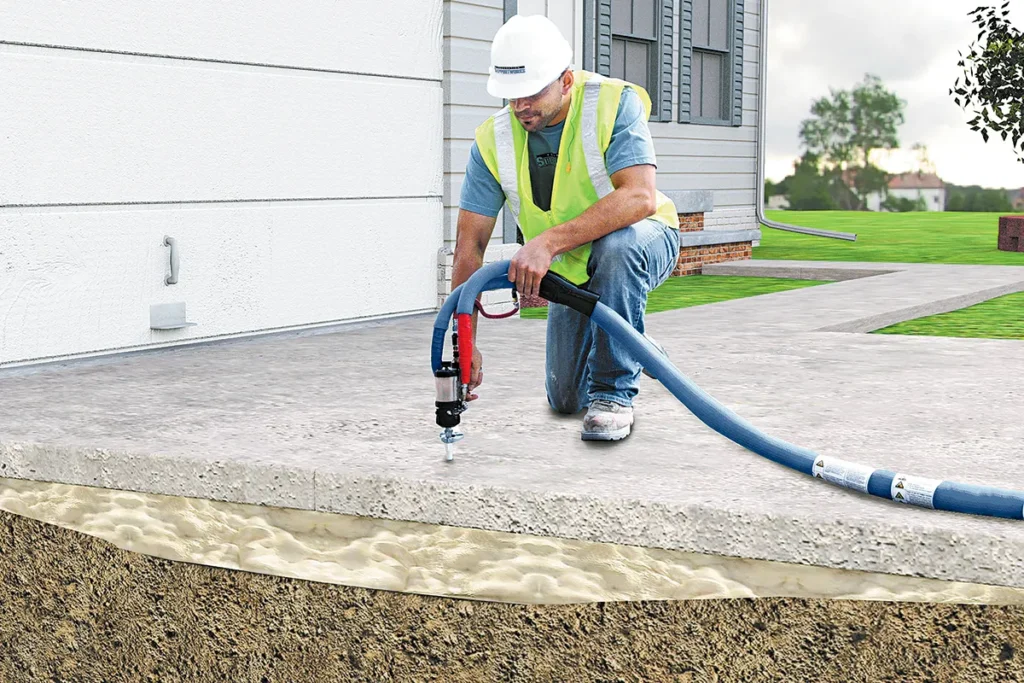
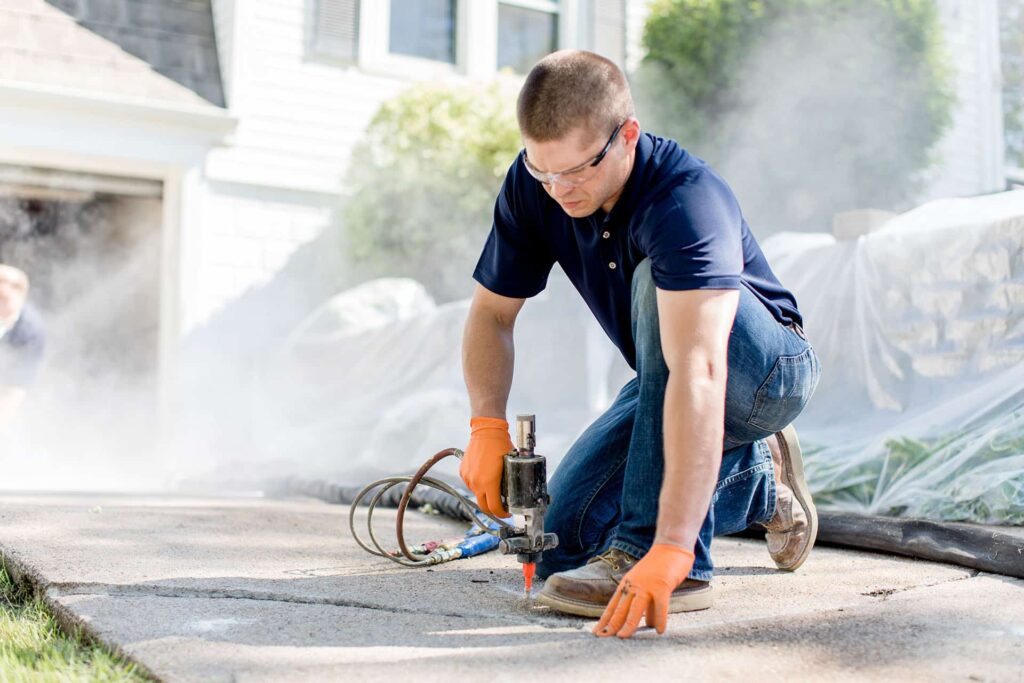
Lifting a garage slab follows the usual sequence — ports, foam, careful monitoring, patches — with a few additions:
- Locate what’s in the slab. In-floor radiant tubing, water and drain lines, and electrical conduit all need to be found before drilling. On post-tensioned slabs (common in some regions), drilling in the wrong place can damage a tensioned cable — that’s a job for someone who knows how to locate them.
- Mind the floor drain. If the garage has a drain, the lift has to keep a fall toward it.
- Ventilate and protect. Doors open, cars out, and anything stored along the walls moved back so the crew can watch the edges.
Warehouse and industrial floors: rocking slabs
In a warehouse, the classic complaint isn’t a slab that’s dropped three inches. It’s a joint that slams every time a forklift crosses it. The slab edges have curled or the subgrade under the joint has pumped out, and now each panel rocks a fraction of an inch under load. That movement chews up the joint filler, spalls the joint edges, shakes loads and wears out forklift wheels and bearings.
The fix is often slab stabilization: injecting foam to fill the void under the joint so both panels are fully supported again, with only as much lift as the measurements call for. Once the panels stop moving, the joint can be refilled with a semi-rigid joint filler and the edges repaired.
Where Lift 300 earns its keep
ArmorThane makes two lifting foams. Lift 200 at about 2.5 lb/ft³ covers residential work. For heavy slabs and high dead loads — warehouse floors, loading docks, equipment pads, thick industrial slabs — ArmorFoam Lift 300 at about 3.75 lb/ft³ gives a more powerful, steadier lift and longer-lasting support.
Keeping the building running
Downtime is usually the deciding factor in industrial repairs, and it’s where foam has the biggest edge over replacement:
- Phase the work. Lifting crews can work one aisle, bay or joint line at a time while the rest of the building keeps operating.
- Short return-to-service. Foam reaches working strength in minutes, so a section can often reopen the same shift.
- Small footprint. A truck- or trailer-mounted rig sits outside; only hoses come in. There’s no mixer, no forms and no 28-day cure.
- Measure before and after. Laser or survey readings of each panel give the facility a record of what moved and by how much.
Other commercial slabs
- Loading docks and aprons where heavy trucks have pumped out the subgrade.
- Parking areas and drive lanes with settled panels and ponding water.
- Equipment and machine pads that have tilted out of tolerance.
- Retail and restaurant floors that need to be fixed overnight, between closing and opening.
Managing a building with a rocking or sunken floor? Request a commercial site assessment. Contractors looking to add industrial lifting can get the startup package.
About the Lift Report
The Lift Report is the Poly Concrete Lifting guide to polyurethane slab lifting, written with input from the ArmorThane team that manufactures ArmorFoam Lift and the rigs that pump it. Got a correction or a job worth writing up? Tell us.