Void Filling and Soil Stabilization Under Concrete Slabs
The cheapest time to fix a sunken slab is before it sinks. How voids form under concrete, how to find them, and how polyurethane foam fills them and firms up loose soil.
Key takeaways
- Voids form when water carries fine soil out from under a slab, or when loose fill consolidates — the slab often bridges the gap for a while before it cracks.
- Hollow-sounding concrete, open joints, soil stains at joints and slabs that rock under load are the warning signs.
- Filling a void before the slab cracks is cheaper than lifting or replacing it afterwards.
- Polyurethane fills voids without adding much weight, and its closed-cell structure resists water.
Concrete is surprisingly good at hiding problems. A slab can sit over a void for months, spanning the gap like a little bridge, while the soil underneath keeps disappearing. Then one day a car parks on the wrong spot or the ground freezes, and the slab cracks and drops. By then you’re paying for a lift — or a replacement.
Void filling is the boring, preventive cousin of slab lifting. It’s also often the smartest money you can spend on concrete.
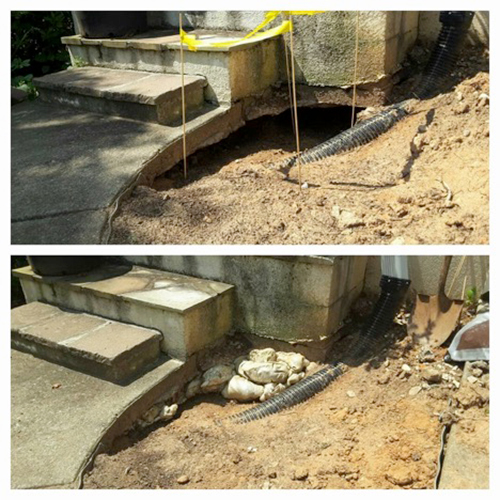
How voids form
- Erosion. Water that gets under a slab — from a downspout, an open joint, a leaking pipe or a high water table — carries fine soil away with it. Each rain moves a little more.
- Pumping. When a slab deflects under traffic, it pushes water and fines out through the joints. You can sometimes see it as a muddy stain fanning out from a joint after rain.
- Consolidation. Loose fill — around foundations, pools, utility trenches and culverts — slowly compacts under its own weight and the slab’s.
- Decay. Buried roots, old lumber or debris rot away and leave cavities.
How to spot a void before it costs you
- Sound it. Drag a chain or tap with a hammer. A hollow, drum-like sound means there’s air under the slab.
- Look at the joints. Open joints, missing sealant and soil or silt stains at the joints all point to water moving underneath.
- Watch it under load. A slab that rocks or clunks when a vehicle crosses it has lost support at the joint.
- Check the edges. A gap between the slab edge and the soil, or soil that has washed out from the side, is a void you can see.
Why polyurethane is the go-to void filler
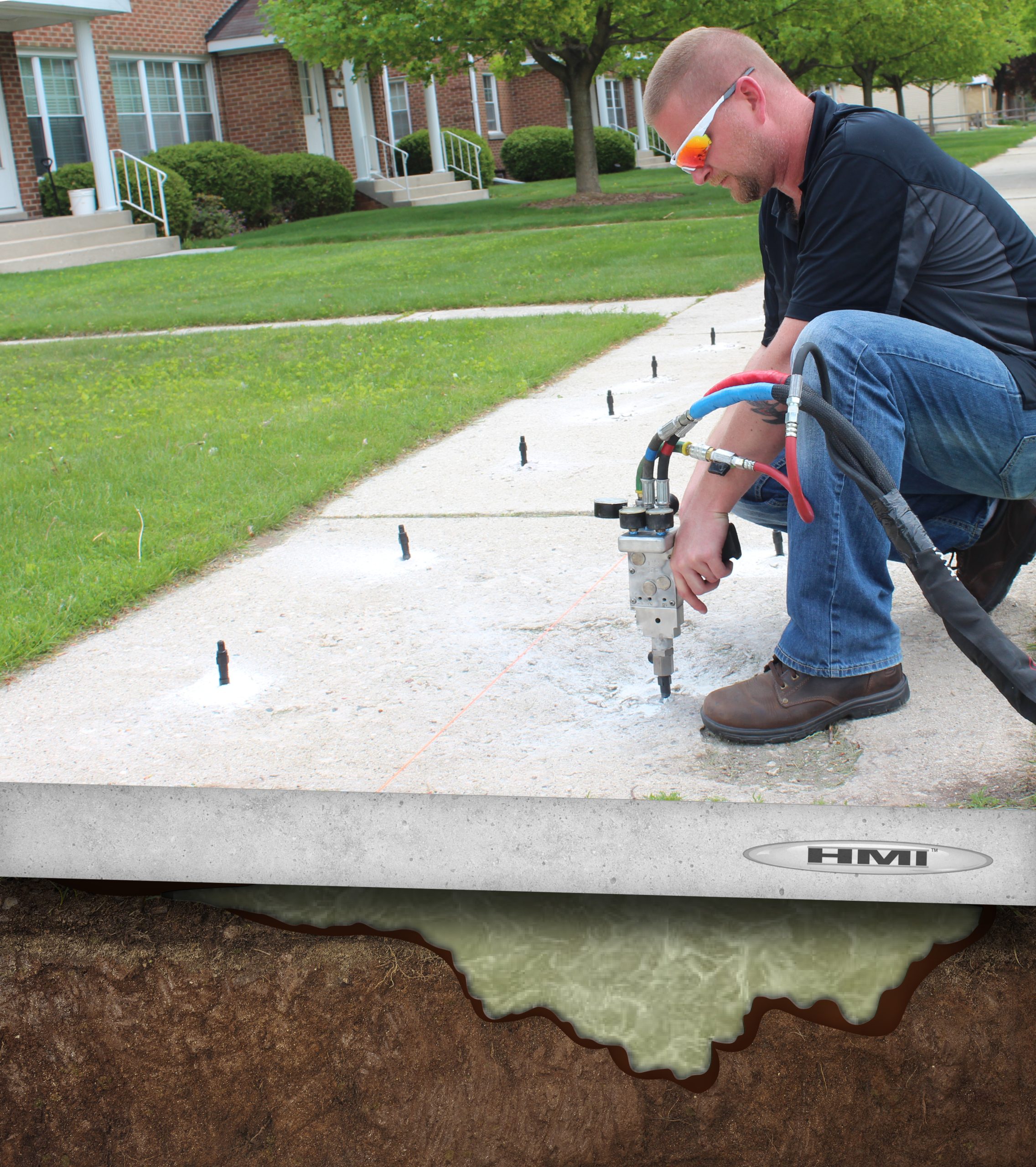
Any void filler has three jobs: get into the space, support the slab, and not make the underlying problem worse. Polyurethane foam does all three well.
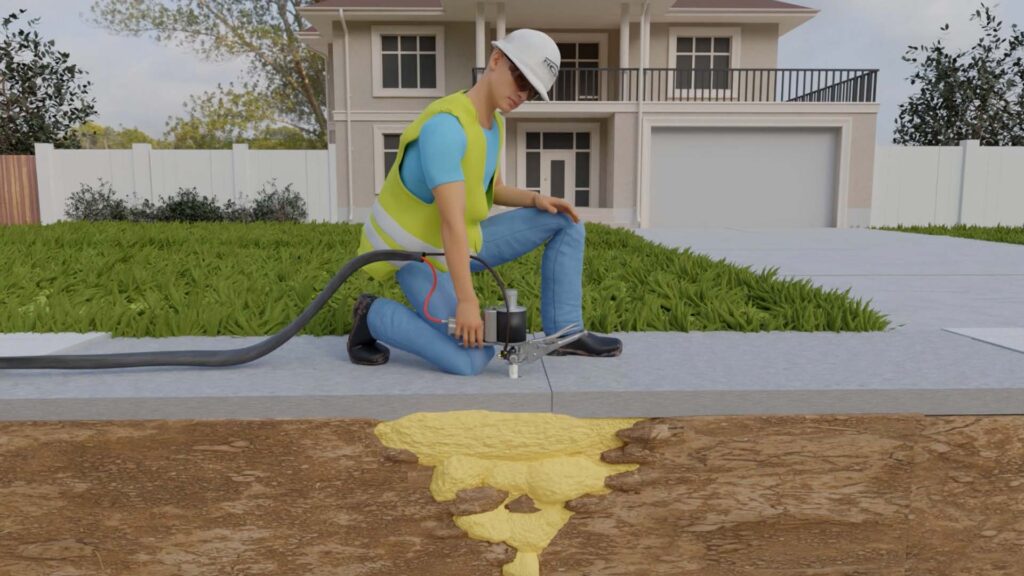
- It travels. Liquid foam flows into irregular cavities before it expands and sets, reaching places a stiff grout won’t.
- It’s light. At a few pounds per cubic foot, it doesn’t add meaningful load to weak soil the way cement slurry does.
- It resists water. ArmorFoam Lift is a closed-cell, hydrophobic polymer that can be injected into damp or wet ground and still cure.
- It’s fast. Foam sets in minutes, so the area can go back into service the same day.
Where void filling is used
- Residential slabs — driveways, walks, patios and steps that sound hollow but haven’t dropped yet.
- Behind and under retaining structures, seawalls and wingwalls where water has washed soil out.
- Around culverts and pipes where backfill has eroded along the pipe.
- Under industrial floors and docks to stop panels rocking at the joints.
- Approach slabs and pavement panels where traffic and water have pumped out the base.
Soil stabilization: going deeper
Most residential void filling happens in the first foot or so under the slab. Deeper soil stabilization is a different technique: injection tubes are driven down into weak soil and foam is placed at depth to densify and strengthen it, so the slab above stops settling. It’s specialized work, engineered job by job, and it’s one of the ways an established lifting company grows into commercial and municipal markets.
What void filling costs compared with a lift
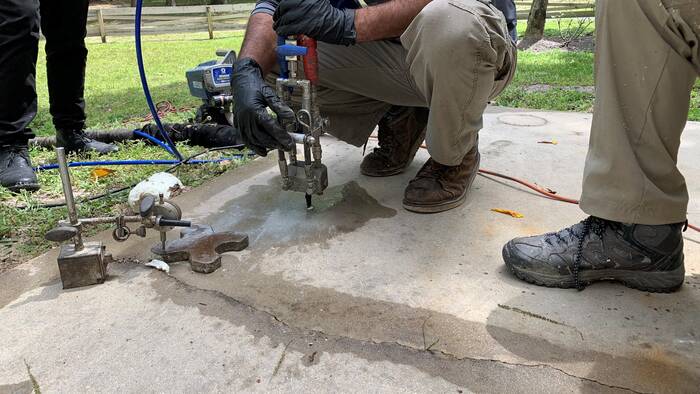
Because foam is priced mainly by the pound, a void fill caught early is usually a smaller bill than the lift you’d need after the slab drops — and far smaller than a replacement. It’s also quicker: often a few ports, a modest amount of foam and an hour or two on site.
Concrete sounding hollow? Request a free estimate before it cracks.

About the Lift Report
The Lift Report is the Poly Concrete Lifting guide to polyurethane slab lifting, written with input from the ArmorThane team that manufactures ArmorFoam Lift and the rigs that pump it. Got a correction or a job worth writing up? Tell us.