Sidewalk Trip Hazards: Lifting Walkway Slabs Back to Flush
A half-inch lip is all it takes to send someone to the ground. How walkway slabs settle, what the accessibility rules say about vertical changes, and why lifting beats grinding for most of them.
Key takeaways
- Accessibility standards allow only 1/4 inch of vertical change without a bevel, and changes over 1/2 inch need a ramp — most trip hazards blow past that.
- Grinding shaves the lip but leaves the slab sitting on the same void; lifting fixes the cause and keeps the walk's original slope.
- Walkways near downspouts, trees and building foundations are the usual offenders.
- Property managers and cities can clear a long list of hazards in a single day with minimal disruption.
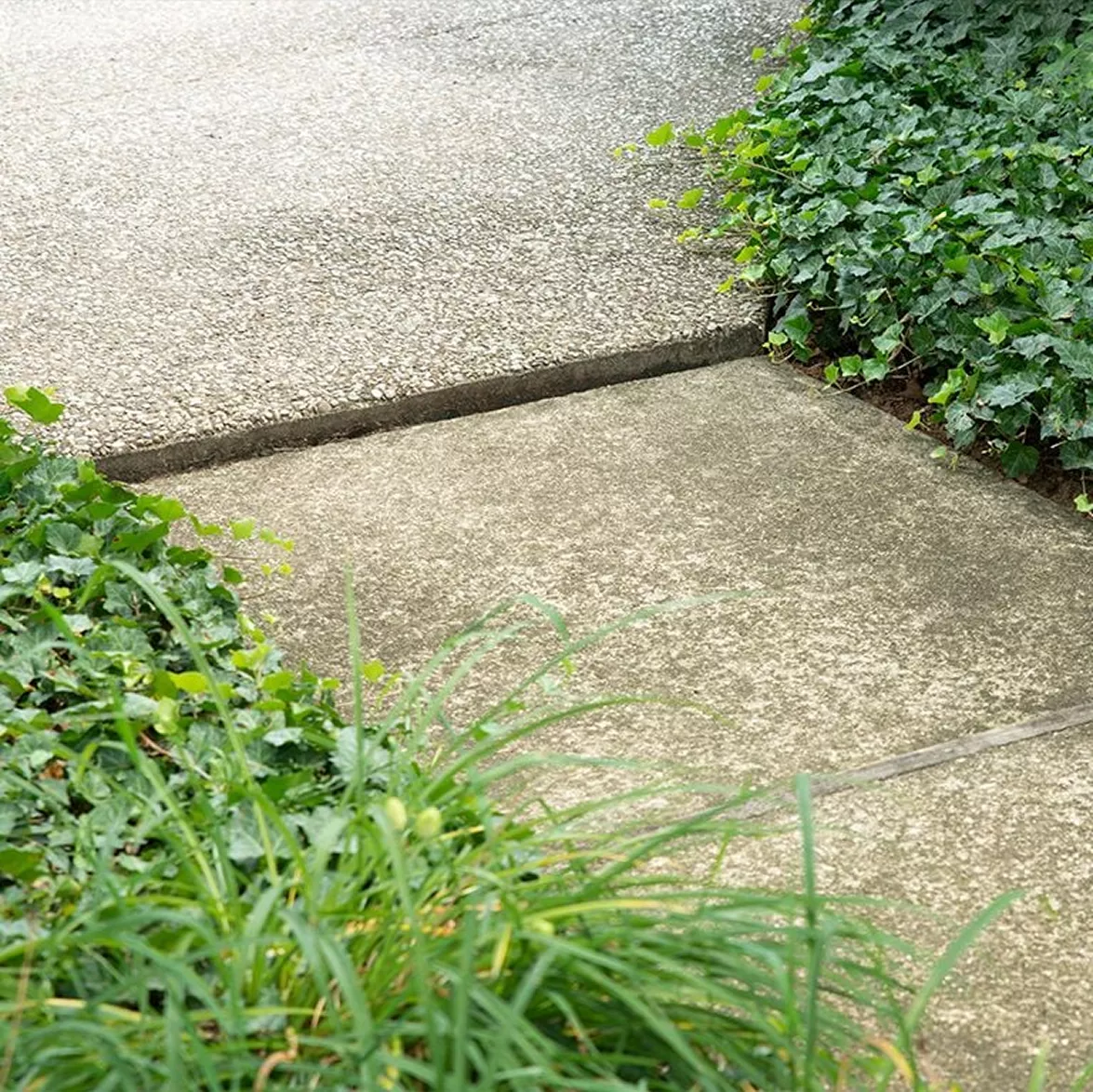
A sidewalk trip hazard doesn’t look dangerous. It’s a lip, maybe an inch, sitting in plain sight. Then someone walks it carrying groceries, or pushing a stroller, or reading a phone, and it turns into a fall — and for a business or landlord, sometimes a claim.
The good news: most walkway hazards come from slabs that have settled, not slabs that have failed. Settled slabs can be lifted back to flush.
How much of a lip is too much?
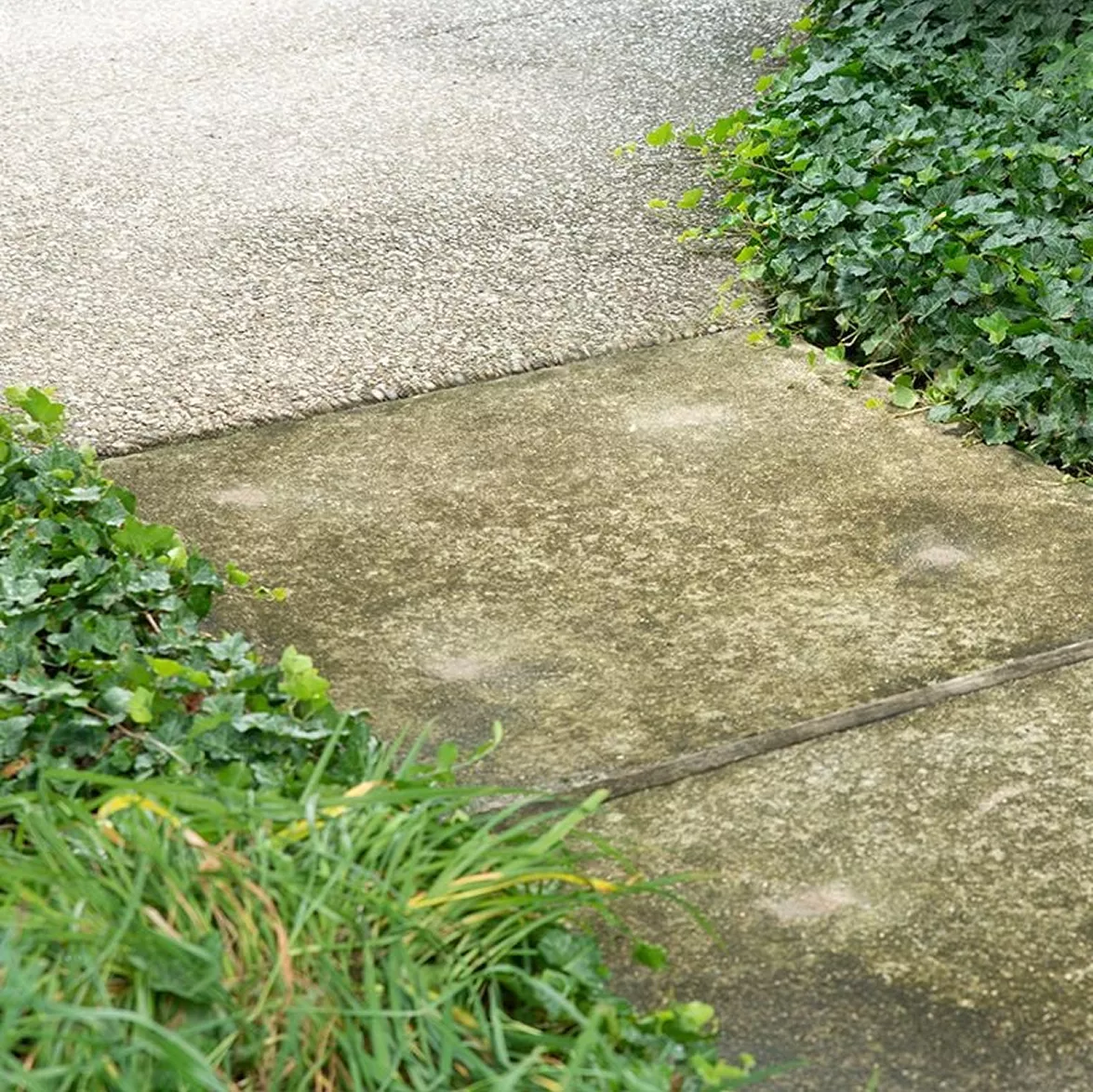
The 2010 ADA Standards for Accessible Design are the common yardstick, even for walks they don’t strictly govern. They allow a vertical change of up to 1/4 inch with no edge treatment. Between 1/4 and 1/2 inch, the edge has to be beveled at no steeper than 1:2. Anything over 1/2 inch has to be treated as a ramp.
In practice, many cities and insurers treat anything past about half an inch as a hazard that needs repair. Walk your property with a tape measure and you’ll probably find more of those than you expected.
Why walkway slabs drop
- Water at the edges. Downspouts and sprinklers aimed at the walk soften the soil under one end of a slab, and that end drops.
- Backfill near buildings. Walks that run alongside a foundation sit on the same loosely compacted backfill that sinks driveways and patios.
- Tree roots, both ways. Living roots push slabs up. Roots from a removed tree rot away and leave voids that let slabs drop.
- Joints that never got sealed. Rain goes straight through an open joint and carries soil away a little at a time.
Lifting versus grinding versus replacing
There are three common fixes for a sidewalk lip, and they solve different problems.
| Fix | What it does | What it leaves behind |
|---|---|---|
| Grinding / shaving | Cuts the high edge down to a bevel | The slab still sits on the same void and can keep dropping; the cut face looks different from the rest of the walk |
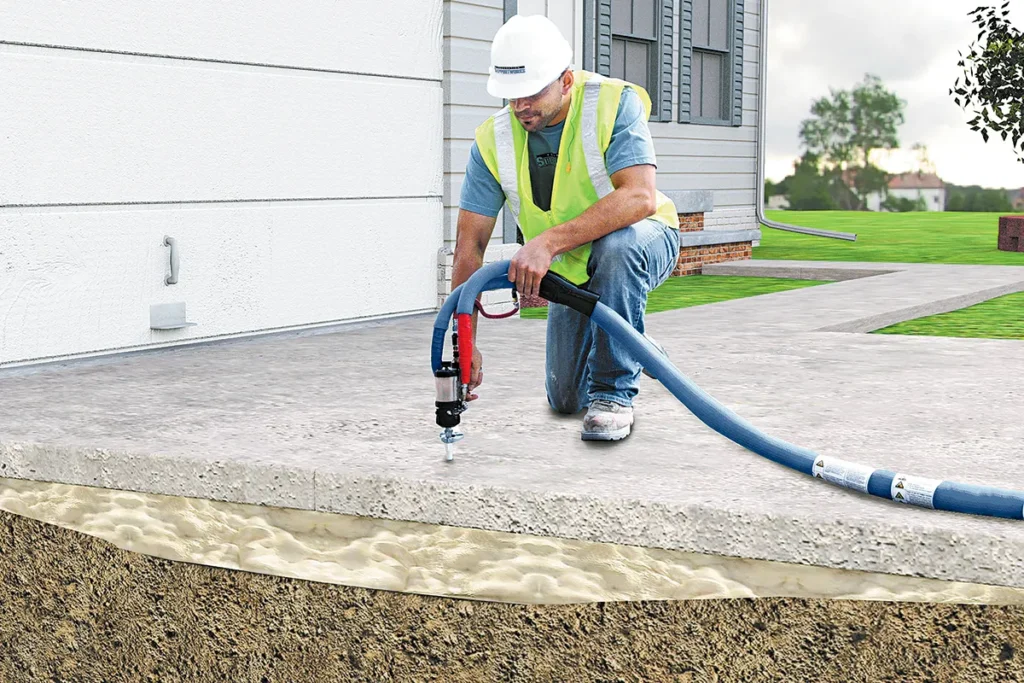
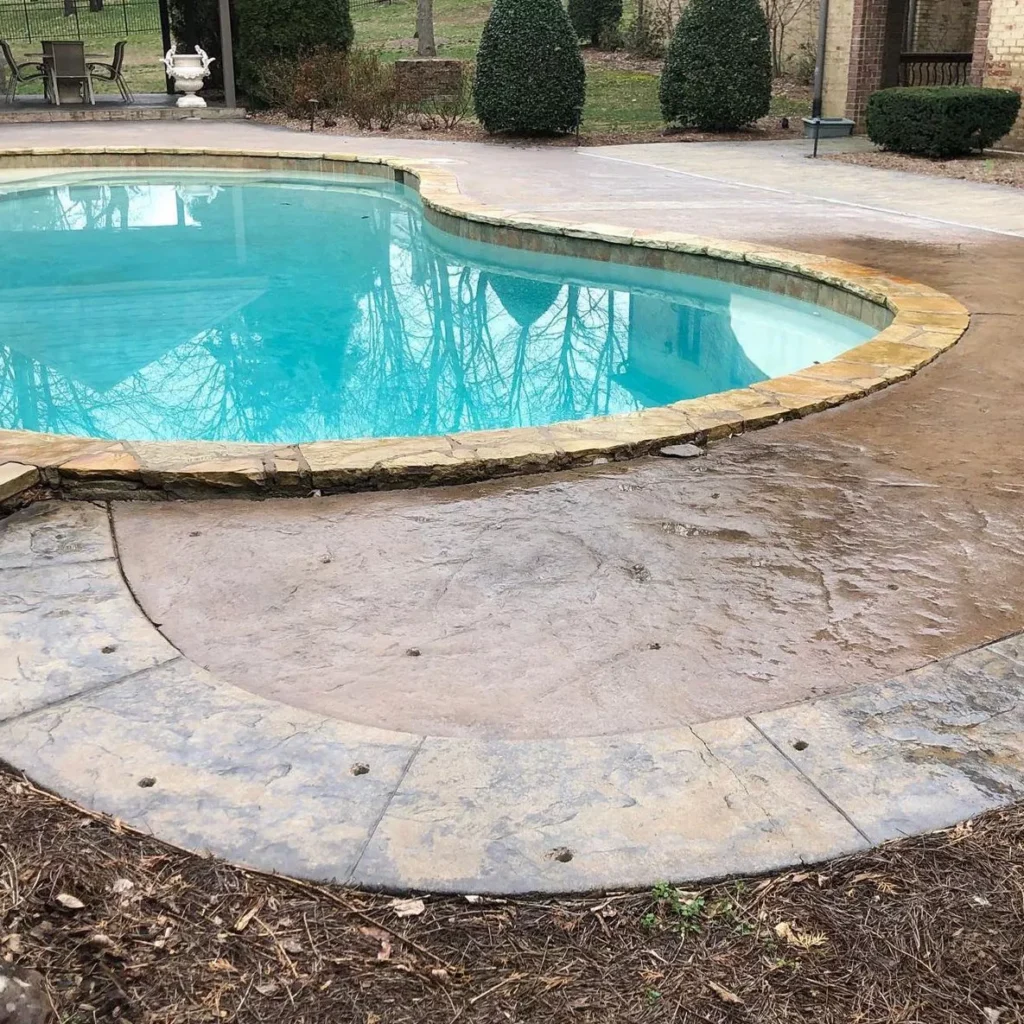
| Polyurethane lifting | Fills the void and raises the low slab to meet its neighbor | A few small patched ports; the walk keeps its original slope and drainage |
| Replacement | New slab on new base | Days of closure, new concrete that won’t match, and the same soil problem if nobody fixed the water |
Grinding is the right answer for a slab that has heaved up over a root — you can’t lift a slab down. For slabs that have sunk, lifting tends to be the better fix because it addresses the void, not just the edge.
How a walkway lift goes
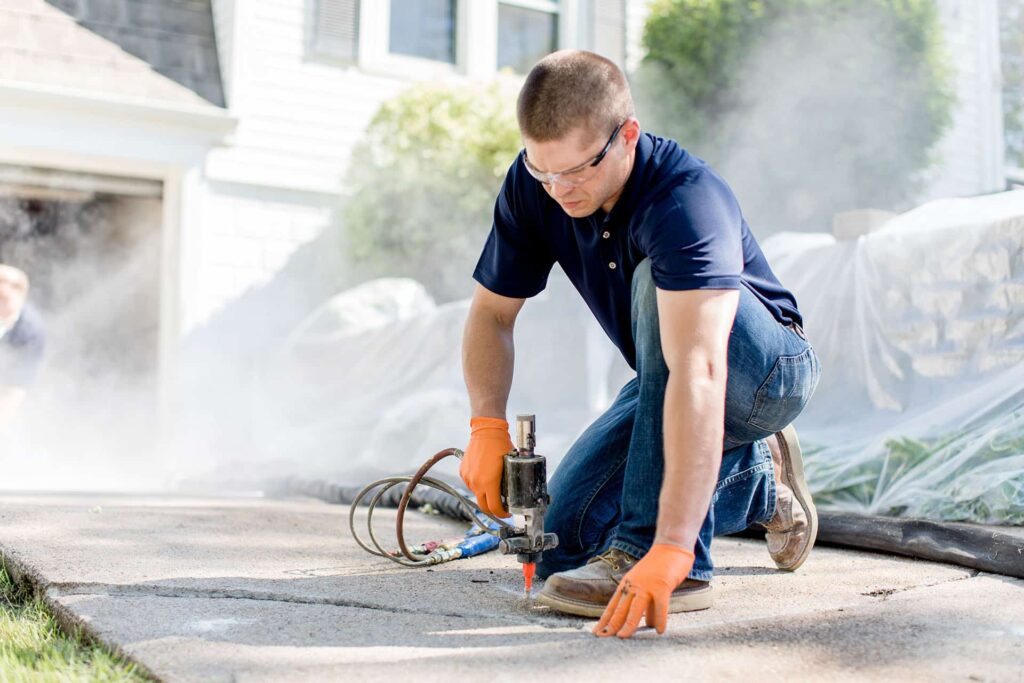
Walks are small, light slabs, which makes them some of the most satisfying lifts there are. A tech drills two to four ports in the low slab, injects in short bursts and watches the joint close up. Sometimes the neighbor slab gets a shot too, so the two settle into one smooth plane rather than a new lip in a different spot. Ports are patched, the joint is sealed, and the walk is usually open again within about half an hour.
For property managers, HOAs and cities
If you manage more than a few buildings, trip hazards are a recurring line item. A few things make the program easier:
- Survey once, fix in batches. Measure and photograph every lip over 1/4 inch, then schedule them together. Mobilization is a big part of any lifting bill.
- Fix the water at the same time. Redirect the downspout or sprinkler that caused the settlement, or you’ll be back next year.
- Seal the joints. Flexible joint sealant is cheap insurance against the next washout.
- Keep the records. Before-and-after photos with measurements are useful if a claim ever comes up.
Have a walk that’s catching toes? Request a free estimate — or if you’d like to offer this service yourself, see how to start a lifting business.
About the Lift Report
The Lift Report is the Poly Concrete Lifting guide to polyurethane slab lifting, written with input from the ArmorThane team that manufactures ArmorFoam Lift and the rigs that pump it. Got a correction or a job worth writing up? Tell us.