
Leveling is a practical and efficient solution for repairing surfaces and damaged foundations, such as driveways and patios, that may sink or shift over time due to factors such as soil erosion or natural settling without the need for complete replacement.
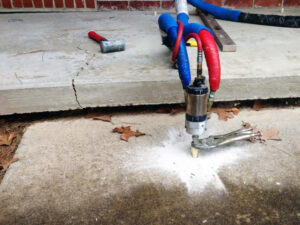
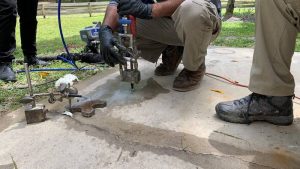
Leveling concrete is achieved by filling the void beneath the slab and lifting it to its position using materials like polyurethane foam or a cement-based mixture injected into the space underneath the slab to stabilize and restore its height with precision, suitable for various structures ranging from residential buildings to significant industrial complexes.
Unlike replacing surfaces, concrete leveling aims to maintain the existing surface, reducing waste and cost savings. Using materials,, the elevated concrete can withstand weight without compromising its strength and durability. This method has become increasingly popular for its effectiveness in addressing problems without causing significant disturbances.
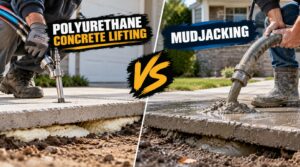
Polyurethane foam has emerged as a choice for leveling due to its fast expansion and quick hardening properties, which ensure even slab lifting and strong bonding capabilities. As it cures, it creates a foundation under concrete, reducing the risk of shifting or settling, unlike other materials. Polyurethane foam’s resistance to moisture and long-term durability make it ideal for surfaces exposed to the elements.
Cement-based blends can also be utilized for leveling tasks and repairs. These blends are denser and require solidifying time, yet they provide a secure and dependable fixing solution. However, in scenarios where quickness and minimal interference are crucial, polyurethane foam frequently emerges as the choice.
Regarding driveways or patios with sinking or uneven concrete surfaces, it’s not about looks; it can pose safety risks like tripping incidents. Cause problems with drainage and the structural integrity over time, if not addressed promptly. Fixing the levels helps property owners and commercial establishments to repair these areas. What is great is that the small injection holes used in leveling surfaces leave little visible evidence of any repairs once it’s all done.
Concrete leveling offers a range of advantages due to its versatility in settings such as areas and commercial or industrial spaces alike. From fixing sidewalks to supporting expansive warehouse floors, it uses a consistent technique that relies on durable materials for structural lift and stability.
Leveling concrete is more than a solution; when done right, it can provide a lasting fix by lifting the slab and filling in any empty spaces beneath it for added support to prevent future sinking issues. The ground below the concrete may be susceptible to erosion or compression. The leveling procedure helps stabilize these areas to ensure a foundation.
Concrete leveling now offers an edge in speed compared to replacement endeavors that might stretch over days or weeks—a stark contrast to the hours typically required to complete concrete leveling projects. Once the foam or cement blend sets and solidifies during the curing process and leveling work, the concrete surface becomes instantly usable for various purposes like pedestrian traffic and vehicle access without any delay. This swift turnaround makes it an attractive choice for homeowners and businesses who seek to avoid periods of inactivity.
Polyurethane foam’s lightweight, durable characteristics often make it the top pick. Its minimal weight guarantees that it won’t burden the soil unnecessarily—a factor that might otherwise lead to settling. Furthermore, thanks to its uniform expansion, the foam provides support under the slab, thus minimizing the likelihood of future shifting or displacement.
Concrete leveling solutions are particularly beneficial in areas that often face weather conditions such as rainfall and freezing temperatures or experience frequent cycles of thaw and freeze that can cause concrete surfaces to crack and shift over time. The materials utilized in the leveling process safeguard against moisture intrusion and minimize the likelihood of damage resulting from freeze-thaw cycles. These solutions prove advantageous for regions characterized by winters or moist climates.
In addition to being used in homes and buildings, repair work included in projects for infrastructure development has become more common for leveling tasks that are carried out at a bigger scale, such as roads, bridges, and industrial structures, which frequently encounter foundational problems leading to significant issues fixing these surfaces with polyurethane foam offers a quick and dependable solution, enabling engineers to tackle foundation related challenges without having to resort to expensive and disruptive reconstruction. The accuracy provided by concrete leveling guarantees that even sizable slabs are raised uniformly and adequately supported.
Fixing surfaces has also successfully lifted sunken slabs caused by unstable soil conditions. Furthermore, the material injected doesn’t just elevate the slab; it also reinforces the soil to prevent erosion or sinking issues while providing long-term stability to the structure.
Homeowners with driveways or sunken patios can opt for leveling as a simple fix solution that preserves the existing surface and minimizes disruptions to landscaping or hardscaping elements. After the leveling is done and dusted with workmanship in place of touch-ups or refinishing requirements, the restored surface appears seamless and blends in naturally.
In business settings, the process of leveling can repair surfaces that undergo heavy usage, such as parking lots, warehouse floors, or loading docks. These spaces frequently support weights, and any subsidence or movement can create situations for employees and vehicles. Leveling guarantees the prompt restoration of these surfaces, minimizing the likelihood of accidents or interruptions in operations.
The effectiveness of leveling concrete relies on the quality of materials used and the skills of the professionals carrying out the task.The technicians who are well versed in this method grasp the intricacies involved in each step, from pinpointing the reasons for sinking to selecting the injection substance. With a strategy in place, cement leveling offers enduring outcomes that effectively uphold structural integrity.
Many individuals know about fixing cracked concrete, but not as many understand the advantages of leveling techniques—they’re efficient in terms of time and cost while being minimally disruptive to your property’s state of affairs! Opting for leveling over replacement can help property owners save money and precious time by avoiding reconstruction projects.
In summary, concrete leveling emerges as an option for fixing sunken surfaces. Its capacity to elevate and support concrete renders it a favorable selection for an array of uses. In an industrial environment, concrete leveling restores safety, usability, and visual appeal, guaranteeing that surfaces retain their strength and dependability over the long term.