For most driveways, walkways, patios, and garage floors, polyurethane concrete lifting is the better long-term fit. It adds very little weight under the slab, uses small injection holes, and cures in minutes. Mudjacking is often the better pick when the budget is tight, the slab is large, the ground is stable and dry, and a day or two of waiting is fine. Whichever you choose, the cause of the settling matters more than the method.
Picture your driveway. One slab near the garage has dropped about two inches, and now there’s a lip that catches the trash can every Tuesday. A contractor says you have two good options, mudjacking or polyurethane foam, and the foam quote is noticeably higher. Is it worth it?
Sometimes yes. Sometimes no. That’s the honest answer, and this guide explains what separates the two methods, where each one shines, and which questions to ask before you sign anything.
What Is Mudjacking?
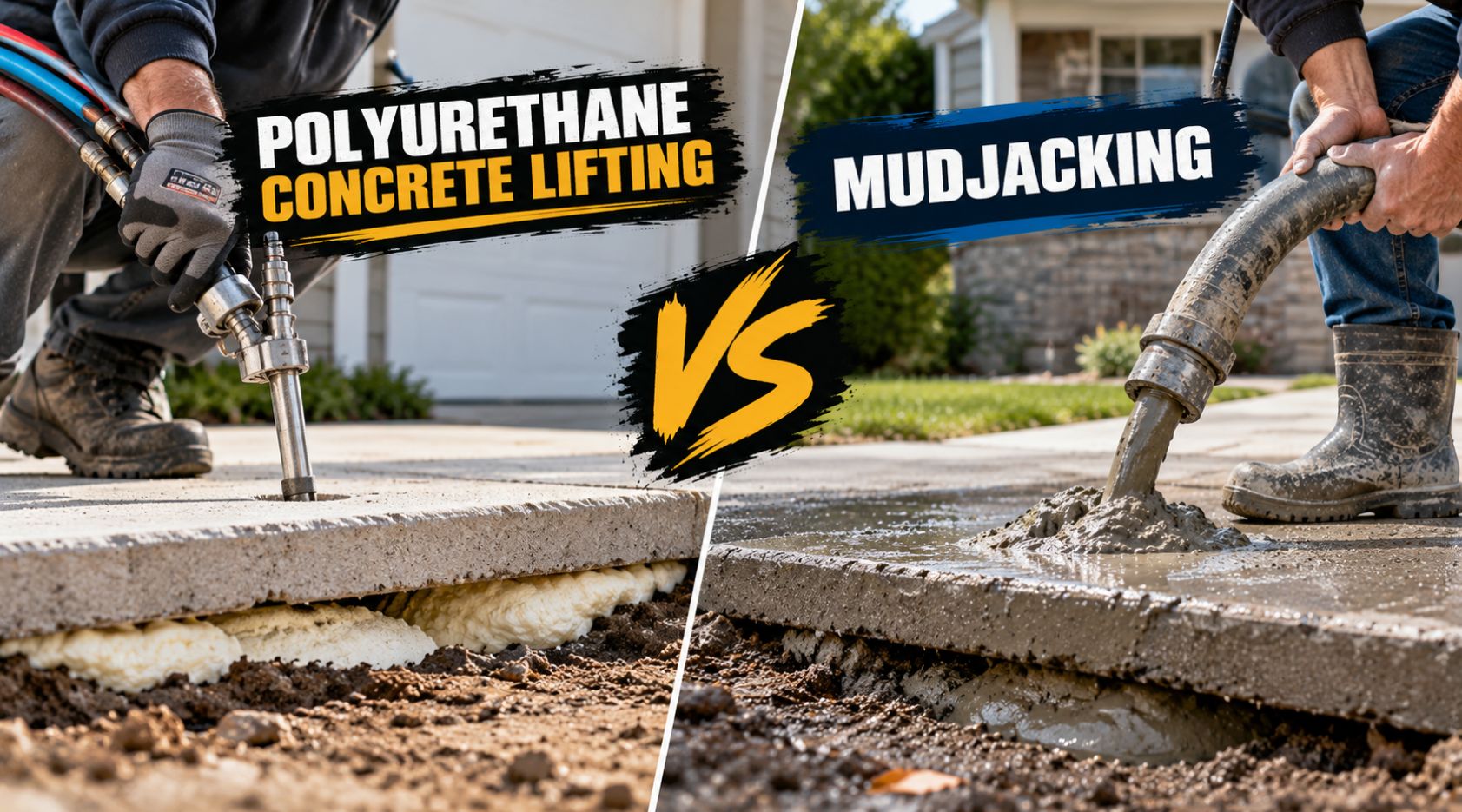
Mudjacking, also called slabjacking, is the older method. A crew drills holes through the sunken slab, then pumps a slurry underneath it under pressure. The slurry is typically a mix of cement, sand, and water, sometimes with other additives. As the void fills, the slab rises. Then the holes are patched.
It’s been used for decades, and it works. For big slabs with plenty of room beneath them, it’s a proven, budget-friendly way to avoid tearing out and replacing concrete.
What Is Polyurethane Concrete Lifting?
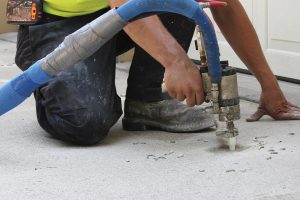
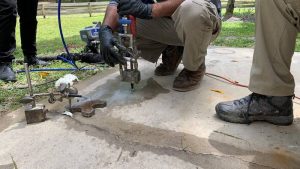
Polyurethane lifting, often called polyjacking or foam jacking, follows the same basic idea with a very different material. Instead of slurry, the crew injects a two-part polyurethane foam through small holes. The two parts combine, the foam expands, fills the void, and lifts the slab.
If you’ve seen spray foam insulation, the equipment and chemistry will look familiar, though the foam used for lifting is formulated to carry load. We go through the basic process in our overview of polyurethane foam injection.
Polyurethane Lifting vs Mudjacking: Side by Side
Typical figures below come from publicly available contractor and supplier guides. Exact numbers vary by product and job.
| Factor | Mudjacking | Polyurethane lifting |
|---|---|---|
| Material weight | Roughly 100 to 150 lb per cubic foot | Roughly 2 to 4 lb per cubic foot |
| Hole size | Larger, commonly about 1.5 to 3 inches | Small, about 5/8 inch (dime-sized) |
| Return to use | Often a day or more | Often within minutes to hours |
| Water behavior | Slurry is porous and can absorb water | Foam generally resists water |
| Upfront cost | Lower | Higher |
| Best fit | Large slabs, stable dry soil, tight budgets | Visible surfaces, soft or wet soil, fast turnaround |
| Main risk | Added weight can contribute to repeat settling | Fast expansion makes over-lifting possible |
That table is the short version. The rest of this guide is why each row matters.
Why Does Material Weight Matter So Much?
Weight is the single biggest practical difference, and it’s easy to overlook.
Think about why a slab sank in the first place. Usually the soil under it compacted, washed out, or shifted. Now you want to fill that gap with something. If you fill it with slurry that weighs 100 pounds or more per cubic foot, you’ve added serious load to soil that already proved it couldn’t hold the original slab. In some cases that soil compresses again, and the slab drops again.
Foam weighs a small fraction of that. It fills the void and supports the slab without piling much new weight onto weak ground. That’s the main reason contractors often steer people toward foam when the soil is soft, loose, or damp.
This doesn’t mean mudjacking always fails. In stable, dry soil, the extra weight may never become a problem. But if your slab sank once already, it’s worth asking why before you load the ground again.
How Do Hole Size and Cleanup Compare?
Mudjacking holes are bigger, and the equipment is bigger too. Crews usually bring a truck, hoses, and a mixing setup. The holes get patched with cement, and on decorative or stamped concrete, those patches can show.
Foam holes are about the size of a dime. They’re easy to fill and much harder to spot afterward. The gear is more compact, so the work area is smaller and tidier. If the slab is a front walkway, a pool deck, or a patio you actually look at, that difference counts.
How Long Until You Can Use the Slab?
This is where foam pulls ahead most clearly. Polyurethane typically reaches most of its strength within about 15 minutes of injection, and many jobs return to normal use within hours. Mudjacking slurry needs time to set, commonly cited as a day or two before the slab takes full traffic, and that wait can stretch longer in cold or damp weather.
For a backyard patio, the wait barely matters. For a business entrance, a loading area, or a driveway you need by tomorrow morning, it matters a lot.
What About Water, Soil, and Freeze-Thaw?
Here’s an honest limitation of mudjacking: the cured slurry is porous, so it can take on water. In places with wet soil or freeze-thaw winters, that moisture can add to long-term wear.
Polyurethane foam generally resists water and doesn’t wash out the way loose fill can. That makes it a popular choice where drainage is a problem or the ground stays damp.
But here’s the part people skip. Neither method fixes the reason the slab sank. If a downspout dumps water at the edge of the slab, or the soil keeps washing away, you can lift the concrete perfectly and watch it settle again in a few seasons. A good contractor will look at drainage and soil first. Our post on why concrete slabs sink and how lifting helps covers the common causes.
How Much Does Each Method Cost?
Mudjacking usually costs less upfront. Foam usually costs more because the material is more expensive and the injection equipment is more specialized. One contractor guide puts foam at roughly 1.5 to 2.5 times the per-square-foot price of mudjacking, though local pricing swings widely, so treat that as a rough range and not a quote.
Two things soften the gap:
- Labor. Foam’s quick cure and smaller crew can cut labor time on some jobs.
- Repeat work. If a cheaper repair settles again and needs redoing, the savings shrink.
Still, a lower price can be the right call. On a large slab in stable soil, mudjacking may deliver the same result for noticeably less money. For a closer look at what drives pricing, see our breakdown of concrete leveling cost, process, and types.
When Does Mudjacking Still Make Sense?
It’s a fair choice when:
- the slab is large and the budget is the main concern
- the soil is stable, dry, and well drained
- appearance isn’t critical, such as a utility pad or back lot
- you can leave the area closed for a day or two
Plenty of long-lasting repairs have been done this way. If your contractor recommends it for good reasons, that isn’t a red flag.
When Is Polyurethane the Better Choice?
Foam is usually worth the extra money when:
- the soil is soft, loose, or damp, so added weight is a concern
- the surface is highly visible, like a walkway, patio, or pool deck
- you need fast turnaround with minimal disruption
- access is tight and large equipment doesn’t fit
- the slab is delicate or older and you’d rather not load it unevenly
One trade-off deserves a mention: because foam expands quickly, it takes skill to control. An experienced crew watches the slab closely during injection so it doesn’t lift too far. That’s one more reason to pick a contractor on experience, not price alone. For more on how foam behaves and the different densities used, see concrete lifting with polyurethane foam.
Which One Is Better for Your Project?
Use this as a quick filter:
- Soft or wet ground? Lean toward polyurethane.
- Big slab, stable soil, tight budget? Mudjacking deserves a serious look.
- Need it done fast? Polyurethane.
- Visible surface? Polyurethane, because the small holes blend in.
- Slab has settled more than once? Find out why before choosing either method.
If you want the earlier, shorter take on this question, we wrote one in Mudjacking or Polyurethane Foam Raising: Which Is Best?. This guide goes further into soil, cost, and the questions to ask.
What Should You Ask a Contractor Before You Hire?
Whichever method they recommend, ask:
- Why this method for my soil and slab?
- What caused the settling, and how will you address it?
- What does the warranty cover, and for how long, in writing?
- How will you control the lift so the slab doesn’t overshoot?
- What will the patched holes look like when you’re done?
A contractor who answers these clearly, and offers a straight comparison between methods, is usually a good sign. If you’re still researching, the full set of guides lives in our concrete lifting category.
The Bottom Line
Mudjacking and polyurethane lifting both raise sunken concrete without replacing it. Mudjacking is heavier, cheaper, and slower. Polyurethane is lighter, faster, tidier, and costs more. For soft ground, high-visibility surfaces, or tight timelines, foam usually earns its price. For large slabs on stable soil and a firm budget, mudjacking is still a sensible tool.
Get two written quotes, ask why each contractor chose their method, and make sure someone has looked at the soil and drainage. The best repair is the one matched to the cause, not the one with the nicest brochure.
Frequently Asked Questions
Is polyurethane concrete lifting better than mudjacking?
For many residential flatwork jobs, it’s the better long-term fit because it’s lightweight, uses small holes, and cures quickly. Mudjacking can still be the smarter choice on large slabs in stable, dry soil where cost is the priority. The best method depends on soil, slab size, budget, and how soon you need the surface back.
Is polyurethane lifting more expensive than mudjacking?
Usually, yes. Foam generally costs more per square foot than mudjacking, and one contractor guide puts it at roughly 1.5 to 2.5 times as much, though prices vary by region and job. Faster cure time and potentially fewer repeat repairs can narrow the gap, so compare total job cost, not just the per-square-foot price.
How long does polyurethane concrete lifting last?
It depends on the soil, drainage, and whether the cause of settling was addressed. Foam resists water and doesn’t wash out like loose fill, so it tends to hold up well, but no contractor can promise an exact lifespan. Ask for the warranty terms in writing and what they cover.
How soon can you walk or drive on the slab after lifting?
With polyurethane foam, foot traffic is often possible within minutes to hours, and vehicles soon after, depending on the contractor’s guidance. Mudjacking typically needs a day or two before the slab takes full traffic. Always follow your contractor’s specific instructions for your job.
Can either method fix a slab that keeps sinking?
Not by itself. Lifting raises the slab, but it doesn’t fix the cause, such as washed-out soil, poor drainage, or a leaking downspout. If a slab keeps settling, have the cause inspected first. Lifting works best when the underlying problem is addressed too.